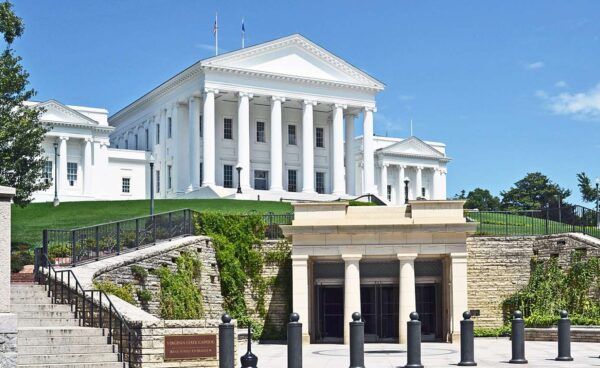
“Over the past year, Virginia has lost more jobs than any other state,” Cardinal News reported. Bureau of Labor Statistics data shows the Commonwealth shed 51,400 jobs from May 2025 to May 2026, with heavy losses in federal positions and professional services, placing it 48th nationally for job growth.

Northern Virginia communities, heavily tied to federal contracting, face heightened risks as manufacturing declines accelerate and a gap widens with neighboring North Carolina, despite Virginia’s solid CNBC business climate ranking.


Bloomberg News via The Virginian-Pilot reported that low U.S. birth rates and restricted immigration risk a housing glut starting in the 2030s as deaths outnumber births and household formation slows, with builders already facing excess inventory in Sun Belt states. Locally, the Fredericksburg Area Association of Realtors® (FAAR) reported an active but more balanced market where inventory has improved, buyers are value-conscious, and pricing/presentation matter more as multiple offers fade.

In Northern Virginia, this national demographic shift could further ease pressure on the Fredericksburg area’s constrained supply of updated homes, though affordability challenges persist for lower- and middle-income buyers amid steady local transactions.


The Metropolitan Washington Council of Governments (MWCOG) reported via its Regional Economic Monitoring System that the Washington Metropolitan Statistical Area lost 54,500 federal jobs from May 2025 to May 2026, part of a broader decline of 100,500 total jobs. Federal employment dropped from 375,800 in January 2025 to 312,500 by May 2026, the lowest level in three decades.

The region’s unemployment rate held steady at 3.9 percent while the professional and business sector also shed jobs, highlighting ongoing federal workforce reductions impacting Northern Virginia’s economy.


7News reported that the Virginia House of Delegates’ proposed budget includes language repealing a law requiring audits of campaign finance reports for statewide candidates and certain elected officials.

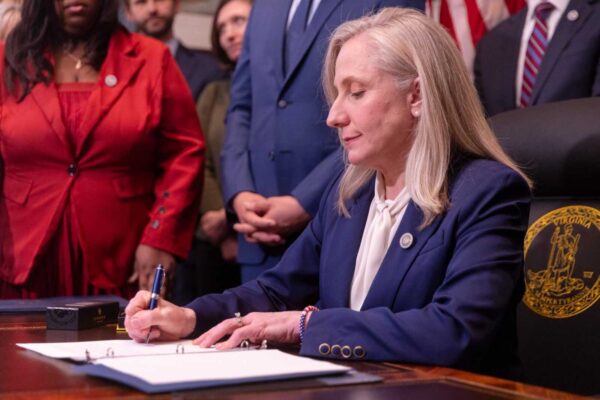
The move would halt ongoing audits of Governor Abigail Spanberger, Attorney General Jay Jones, Lt. Gov. Ghazala Hashmi, and others selected by the Board of Elections, drawing criticism from reform advocates like Clean Virginia and BigMoneyOutVA who argue it weakens transparency in a state with already lax campaign finance rules.


“The Center Square Voters’ Voice Poll found that 62% of voters say local governments should be cautious about new data centers while 24% think they should encourage them because they create jobs, tax revenue and support America’s digital economy,” The Center Square reported. The national survey of 2,585 registered voters, conducted June 1-4 by Noble Predictive Insights, showed similar views across party lines, age groups and regions, with a margin of error of +/- 1.93%.

In Northern Virginia, where data centers have rapidly expanded in areas like Prince William, Loudoun and Stafford counties, the results highlight ongoing local debates over electricity demands, water usage, land impacts and rising utility costs for residents.


“Virginia Senate leaders unveiled a budget proposal Tuesday that would raise an estimated $1.7 billion over two years through a new fee on data center generators,” The Center Square reported. The tiered impact fee on new generators would start Jan. 1 as part of unresolved budget negotiations with the House and Gov. Abigail Spanberger due by June 30.

The plan offers an alternative to phasing out sales tax exemptions for data centers, a key issue for Northern Virginia localities like Prince William and Stafford facing rapid industry growth and related infrastructure demands.


“We will do it in a way that protects consumers, targets the illicit market with clear enforcement and regulatory authority, and creates a more competitive market for small businesses and farmers,” Gov. Abigail Spanberger said in a statement, The Center Square.

The agreement would launch regulated adult-use cannabis sales on July 1, 2027, after license applications open Feb. 1. It includes a 350-store statewide cap, higher possession limits, new state and local taxes, advertising restrictions, and packaging rules, and is expected as part of the final two-year state budget due by June 30.


State Sen. L. Louise Lucas (D-Portsmouth), the powerful Senate President Pro Tempore and chair of Senate Finance and Appropriations, sharply criticized Governor Abigail Spanberger, Democrat, and House Democrats on Monday night for continuing to support massive tax breaks for data centers while residents grapple with rising energy costs, environmental strain, and effects on communities.

This one’s for the people who really care about local news.

Locals Only members get deeper reporting, more context, and fewer shortcuts.

Think that’s you?
👉 Join Locals Only
Already a member? Sign in


“A Virginia legislative report found seven rural hospitals are at the highest risk of financial distress or closure under at least one national assessment model,” The Center Square reported. “All seven reported negative operating margins in 2024.”

Staff told commission members that rural hospitals face challenges including lower patient volumes, higher percentages of Medicare and Medicaid patients, workforce shortages and rising operating costs.


“Just when I thought Chairman Torian and I were getting close to agreeing on a budget, we had a meeting with Data Center Diva this morning and she agrees with Amazon Don who doesn’t want to impact the richest corporations in the country,” The Center Square reported. “I have also been clear that data centers in Virginia need to pay their fair share for energy consumption,” Spanberger said.

“I have brought proposals to the table that would make data centers pay more for the energy they use and address environmental concerns,” Spanberger added.


View More Stories