

 By
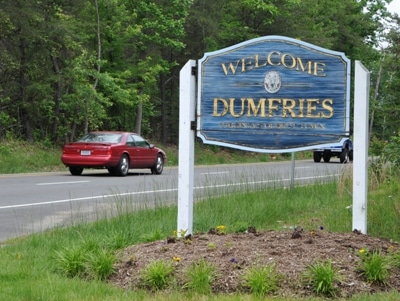
By Dumfries, Va. — The latest changes to Dumfries’ historic boundaries were made by the town council in 2005. The problem is they were never amended in the town code, so now Virginia’s oldest-chartered town must revert to boundaries drawn in 1790.
The change means some property owners may have buildings the historic district and may require approval before any changes to their exterior can be made.
Debi Sandlin, Director of Economic Development for the town of Dumfries, asked the town council to approve a survey of the historic area. They did, but now the survey has to be developed, conducted and the results compiled. According to Sandlin, this could take a year.
Vice Mayor Nancy West said at the June 21 council meeting that she wants to make sure any new boundaries include the Weems-Botts Museum.
Mayor Fred Yohey Jr., and Councilman Willie Toney both want Dumfries Public Cemetery to be protected by the historic designation. Though it has graves dating back to the 18th century, the cemetery it’s not located in the historic districts set by the 1790 or the 2005 maps.
Cemeteries are normally protected under state and federal law. However that’s not always enough, according to Toney.
“I have been in a municipality where a cemetery was removed so a road [could be put] through it,” Toney pointed out. “That was in North Carolina.”
“It can’t hurt to have an extra layer of protection in place,” said Sandlin later in a phone interview.
The cemetery is located near Dumfries Elementary School.
Section 70-383 of the town code currently states:
The boundaries of the historic district shall be according to the overlay of the 1790 town map, with the exclusion of everything east of Fraley Boulevard, better known as U.S. Route 1: South boundaries, Quantico Street; east boundaries, U.S. Route 1 (north Fraley Boulevard); west boundaries, Old Back Street; north boundaries, Marion Street, which presently does not exist.
