

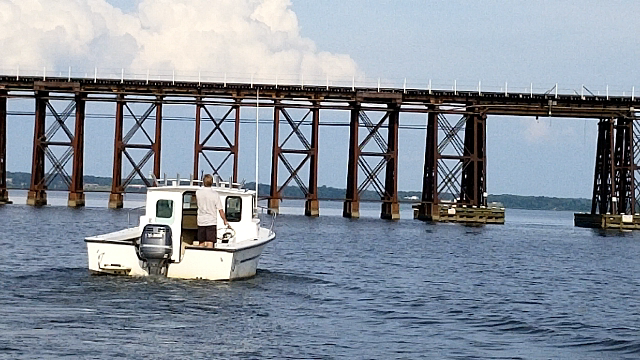
The Potomac River ranks as the most endangered river in the U.S. according to American Rivers’ 2026 list, released this month. The designation is largely driven by rapid, uncontrolled data center expansion in the watershed and by the impacts of a major sewage spill into the river in January 2026.
The Piedmont Environmental Council (PEC) issued a statement on April 16 in response to the report. PEC President Chris Miller stated that the listing underscores the cumulative impacts of data centers on natural resources, including access to clean and abundant water that serves the Washington metropolitan area.
Loudoun County, home to one of the world’s largest concentrations of data centers and bordering the Potomac River, accounts for roughly 2–3% of total water withdrawals from the basin. That figure can rise to as high as 8% during the peak summer months, when cooling demand is highest.
The PEC statement identified three main issues surrounding data center water usage in Virginia:
– Insufficient transparency: Data centers are not currently required to report detailed water usage, and localities are not mandated to evaluate water consumption when approving new projects. Peak summer usage can reach up to three times the average monthly demand and as much as ten times the average daily demand, coinciding with periods of heightened drought risk and increased regional water use.
– Lack of cumulative impact assessment: Virginia has more than 600 data centers. While individual facilities may not pose a severe strain, their combined water and electricity demands—especially peak daily usage during drier late-summer conditions—lack comprehensive statewide tracking. These impacts extend beyond local jurisdictions, affecting households, farms, hospitals, schools, and other users.
– High consumptive use: A large portion of water withdrawn for data center cooling evaporates rather than returning to the watershed. Data centers represent about 9% of annual consumptive water use in the basin and up to 12% during summer months. Reports indicate evaporation losses of 60–80% for some operations. Recent years of below-average precipitation have already reduced streamflow and groundwater levels in central Virginia.
Julie Bolthouse, PEC Director of Land Use, noted that the Virginia General Assembly passed SB 553 this spring. The bill requires utilities to report monthly water volumes supplied to data centers to the Department of Environmental Quality, with reporting scheduled to begin in 2027. Bolthouse called the measure an important first step but said it does not provide details on individual data centers, peak daily usage, or planned consumption for proposed projects. She emphasized that varying cooling technologies across companies have different impacts, and greater transparency is needed, given that Virginia hosts the world’s largest data center market.
In a related podcast discussion with Potomac Local News, Miller elaborated on these concerns. He highlighted that the Potomac River is a primary drinking water source for millions in the Washington region. Arlington County maintains only about 24 hours of stored water capacity, leaving the system vulnerable to disruptions such as the January sewage spill. The area is currently experiencing a multi-year drought that has lowered river flows.
Miller described data centers as large warehouse-style buildings, often 70 to 100 feet tall and spanning multiple football fields, that house computer servers. Once built, they employ relatively few permanent staff but consume large amounts of electricity and water for cooling. He noted that approvals for data centers, water connections, and power infrastructure proceed without a full evaluation of aggregate regional impacts.
Miller pointed to Dominion Energy’s reported projections of up to 70 gigawatts of additional demand, largely tied to data center growth—equivalent to the output of roughly 70 new power plants. He stressed the need for thorough planning of water and energy infrastructure before further approvals are advanced.
Miller also addressed state tax policy, stating that Virginia provides nearly $2 billion annually in tax incentives—primarily through sales tax exemptions on computer equipment and related infrastructure—that benefit data center operators. He noted that this amount represents a significant portion (approximately 6-7%) of all state tax revenues collected each year.
Virginia Gov. Abigail Spanberger (D) received more than $100,000 in contributions from Amazon during her inaugural period, and does not support more aggressive legislation to obtain detailed water-use information from data centers prior to project approvals and has signaled that it is not supportive of eliminating the data center tax incentives that benefit companies such as Amazon, Microsoft, QTS, and Iron Mountain.
The Potomac River supplies drinking water to millions across Northern Virginia, Maryland, and the District of Columbia. Northern Virginia continues to see significant data center development in Loudoun and Prince William counties, with expansion into other parts of the state.
PEC called for stronger statewide processes to track, manage, and mitigate cumulative impacts, enabling better long-term planning for Virginia’s water and energy needs while protecting communities and the environment.
