

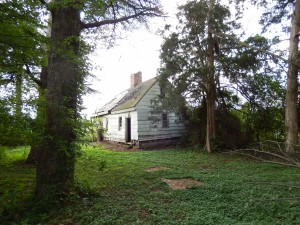
Stafford County has received grant funding to conduct a survey and has partnered with the University of Mary Washington to find artifacts, buildings and sites from the lives of African Americans and slavery in the county prior to 1866.
After an interest had been expressed by local historians, Stafford applied for a certified local government grant from the Virginia Department of Historic Resources, according to Kathy Baker, Assistant Director of Planning & Zoning for the county.
“They were actually looking for projects related to slavery, and slavery sites – because a lot of it has not been documented,” said Baker.
The grant given by the Department of Historic Resources was $14,475, and Stafford County and the University of Mary Washington further contributed, giving the project a total funding of $36,000, according to project documents.
The project began last October and is slated for completion this June.
“We put together a list of probable sites where they may be some standing slavery resources – such as slavery quarters, domestic kitchens, and graveyards,” said Baker.
Now that a preliminary list of sites is established, the individuals in the project plan to meet March 9 to discuss next steps.
Field surveys will be conducted on many sites from the list, with the help from members of Stafford’s Historic Commission and the University of Mary Washington.
While they’re unsure of what they’ll discover during the surveys, the artifacts and structural sites could help the county to document the lives of slaves and African Americans.
“It’s going to depend on what they actually find out there, because a lot of times, particularly with this type of resource, there probably aren’t going to be a lot of standing structures left, so a lot of it is going to be archaeological work,” said Baker.
She also stated that the group would work with the property owners of the surveyed sites, in terms of how to handle artifacts and structures identified during the process.
Some Stafford residents may already be familiar with some of the slavery-related structures in the county, including a building at the Sherwood Farm on Route 3.
