

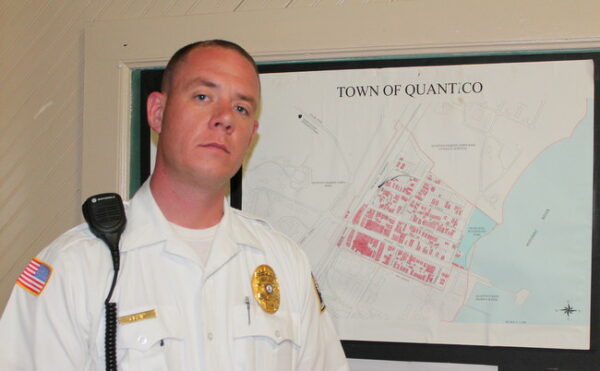
With just five officers in his department, Quantico Police Chief John Clair will watch how the Prince William County Police Department conducts its first tests with body-worn cameras.
A total of 30 Prince William police officers in the Prince William this week will be issued body-worn cameras as part of a pilot program to test the technology in the field. The cameras are quickly becoming the standard in local law enforcement across the U.S. as citizens routinely seek more transparency from local police departments.
The department will present its findings to the Prince William County Board of Supervisors after tt the end of its 60-day test period. That Board will then decide if it will fund the purchase and implementation of body-worn cameras throughout the county police department.
“The Police Department remains committed to protecting our citizens’ constitutional and legal rights, while impartially enforcing the law. The use of the Body-Worn Camera is intended to enhance public trust by documenting law enforcement contacts with the public while promoting accountability, transparency, and professionalism. This Department is continuously seeking ways to improve how we serve the community while strengthening the mutual trust and respect.” states the department in a press release.
Chief Clair worked at the Prince William County and Dumfries police departments before being named police chief in the Town of Quantico. He, too, has been authorized to spend funds — up to $8,000 — to purchase and implement a new body-worn camera system for his department.
The testing conducted by Prince William County will help him determine which camera system is right for his small department. Since Prince William officers have more interactions with the public than officers in Quantico — a town with just over 500 residents — being able to see how the cameras perform during a foot pursuit, or if an officer falls into a lake will be helpful, he said.
The body-worn cameras are quickly becoming what Clair said is the “industry standard” in helping to improve the relationships between police officers and the residents they protect and serve. In the coming years, any department not using such cameras will be viewed by the public as out of touch, he said.
For Clair, choosing which cameras to use and then placing them on his officers is the easy part. It is what comes afterward — the storage of the video collected from the cameras, and what to do with it, and for how long to keep the data on file — is his biggest challenge.
“We’re creating records of peoples’ lives, and you’re going to have a situation in the country in this next decade where every police officer is going to have recorded every interaction it has with the public,” said Clair. “If you call me, and I come to your house, and you’re having the worst day of your life, and I have a video of you, and your house, and of our encounter, do you want me to be allowed to keep that video on file for a year? Do you want me reviewing that video? Do you want someone to be able [request the video through a Freedom of Information Act application]?
If the Prince William County Police Department decides to equip its officers with body-worn cameras on a permanent basis, Clair says he hopes to “ride” the county’s contract with the body-worn camera manufacturer and obtain equipment for his department at a reduced rate.
In addition to body-worn cameras, Clair also has funds to purchase the needed body armour he says is necessary to use the gear. The funds also include money for new video cameras at the town’s police station.
