
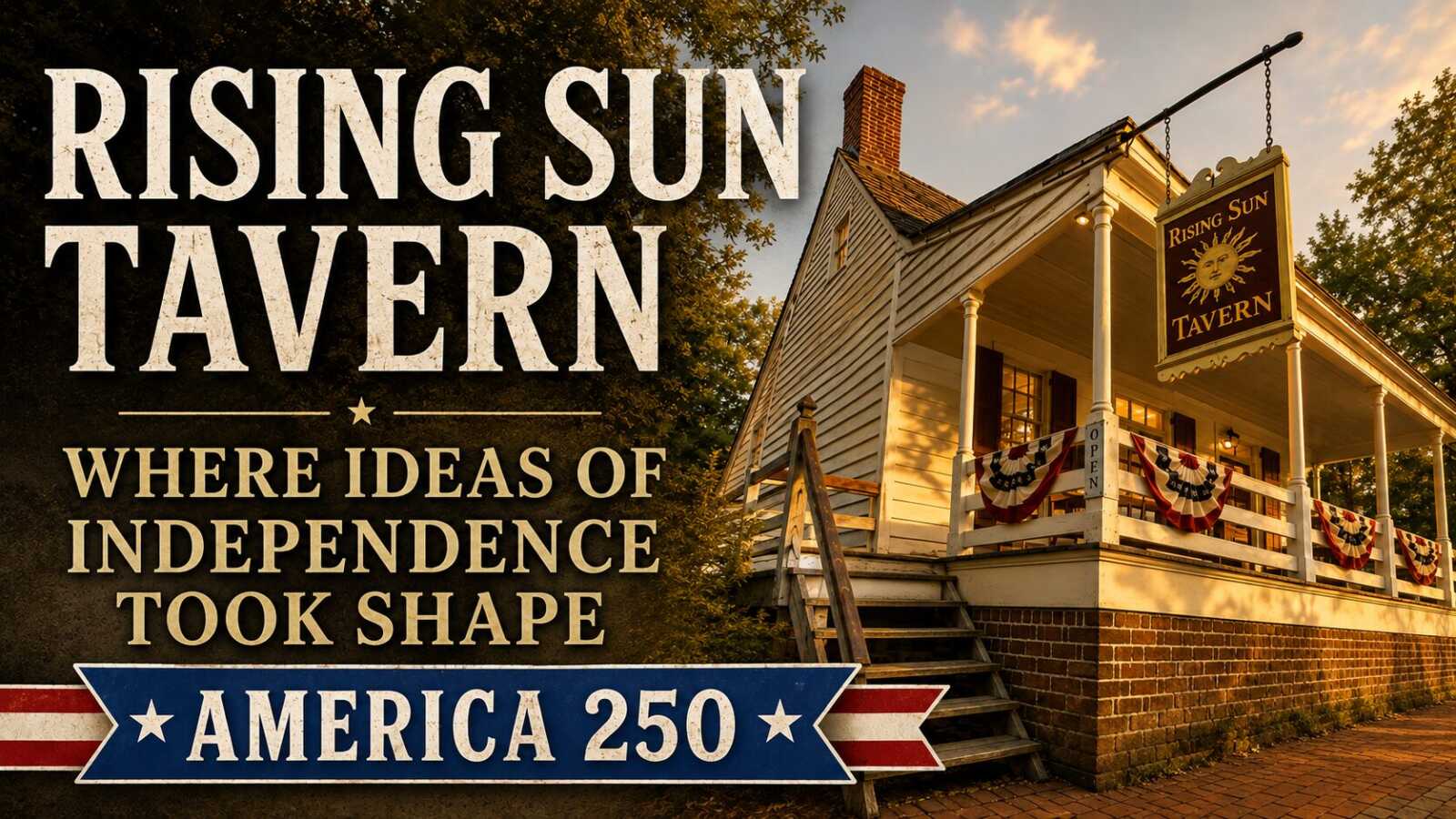
A modest frame house built for George Washington’s brother offers visitors an intimate window into the taverns that helped spark American independence.
As America celebrates its 250th birthday in 2026, the Rising Sun Tavern in historic Fredericksburg stands as a tangible link to the conversations and connections that helped forge a nation. Once the private home of Charles Washington, the site now welcomes guests to experience 18th-century life through costumed interpreters and preserved spaces that buzz with stories of rebellion.
The tavern at 1304 Caroline Street was constructed around 1760 as a residence for George Washington’s youngest brother, Charles. It remained a private home until 1792, when it was converted into a tavern—later known by names including the Golden Eagle—serving travelers along the Rappahannock River port town.
Preservation Virginia acquired the property in 1907, leading to restorations in the 1930s that preserved much of its original woodwork. Today, it is managed by Washington Heritage Museums alongside the Mary Washington House and Hugh Mercer Apothecary.
Kevin Anderson, manager of museum operations and interpretation at Washington Heritage Museums, who has been with the organization for about five years, shared his passion for history with me. “I became interested in history at a very young age,” he recalled. “Somewhere between seventh grade and high school, I became really enamored with Chesapeake history… mainly 18th century history and the pre-revolutionary war period.”
Long before newspapers reached every household or messages traveled instantly, taverns like The Rising Sun served as the original social media hubs: spaces where news, gossip, political ideas, and community opinions were shared face-to-face. “In the run-up to the American Revolution, a lot of talk happened in these taverns,” Anderson explained. “You have all these people mixing… it was a way for people to exchange information quite quickly.” Newspapers and advertisements adorned the caged bars, where travelers from Winchester to Europe swapped news that could fan revolutionary flames.
The Washington family’s local ties run deep. Charles, along with brothers Samuel and John Augustine, signed the Leedstown Resolves in 1766—one of the earliest organized acts of resistance to the Stamp Act. Charles also served on the Committee of Safety and supplied the Virginia militia. While the house itself wasn’t yet a tavern at the war’s peak, its later role as a social center reflects the environment in which ideas spread.
Fredericksburg’s broader importance shines through too. The town sent 600 men marching toward Williamsburg after the gunpowder incident, and figures like General Hugh Mercer and George Weedon emerged from the area. The interviewee noted how travelers along the Rappahannock carried news inland, underscoring the port’s strategic role.
Visitors today enjoy guided tours in period attire, exploring the home’s transition to tavern life. The experience feels authentic rather than grand. “Most people… have visited Mount Vernon… When you visit the… Rising Sun Tavern, it’s much more low-key. It’s not as refined, more rustic,” the manager said, highlighting how it shows everyday gentry life for the Washingtons.
He added a relatable angle for younger visitors: “The Rising Sun Tavern… we’ll call it the Holiday Inn. So it’s not like a very fancy hotel.” Guests shared beds, played dice and cards late into the night, and dined on whatever the tavern keeper offered.
As part of the America 250 celebrations, the site helps connect Fredericksburg’s past to our present. “To see young folks reaching out, curious about the history, makes me feel like history will continue on,” Anderson said.
The Rising Sun Tavern is open for guided tours, and it offers a perfect half-day escape into living history. Visit washingtonheritagemuseums.org for hours and tickets. In a time of national reflection, this humble tavern reminds us that independence was forged not just on battlefields, but in everyday gathering places across Virginia.