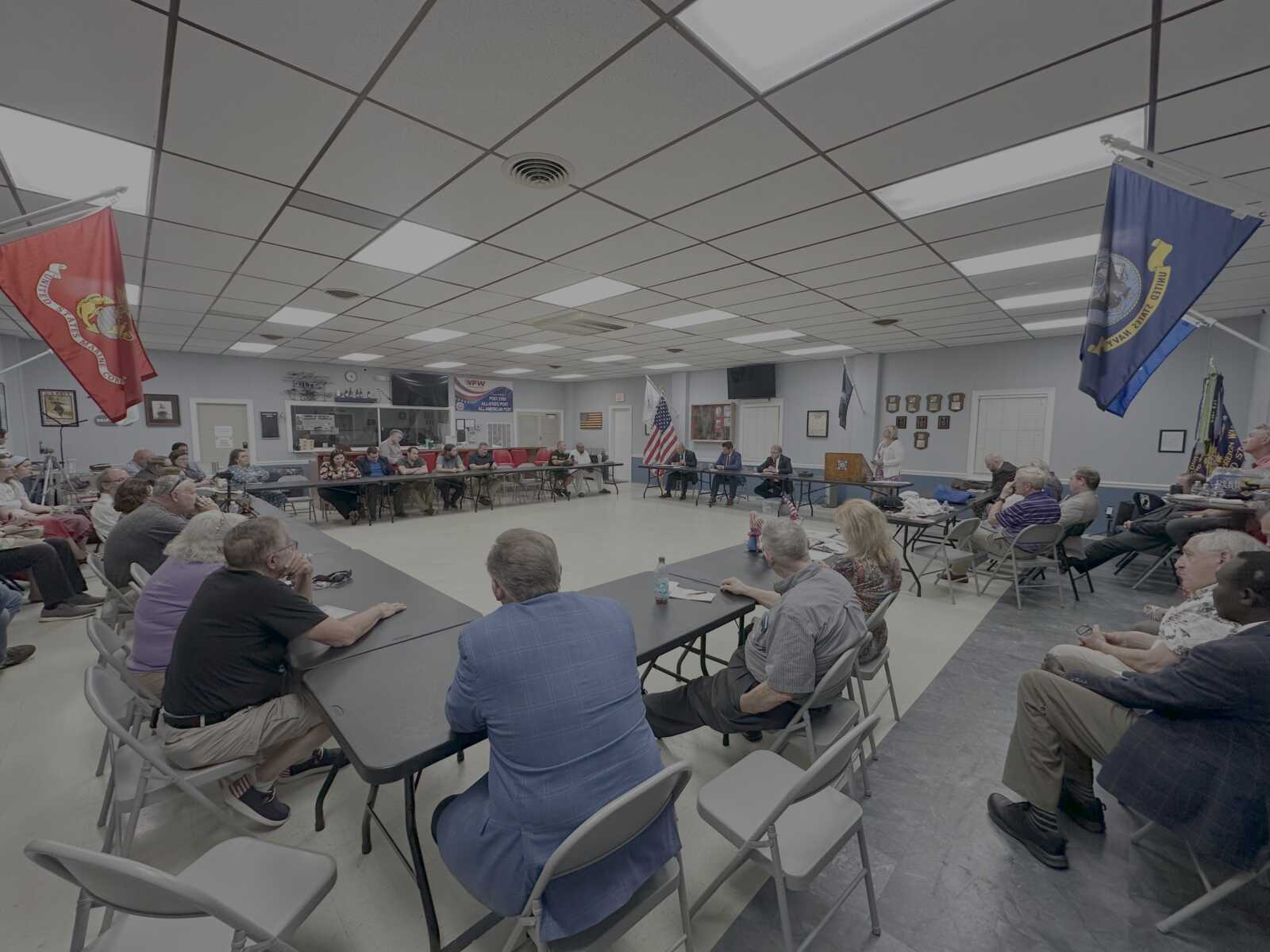
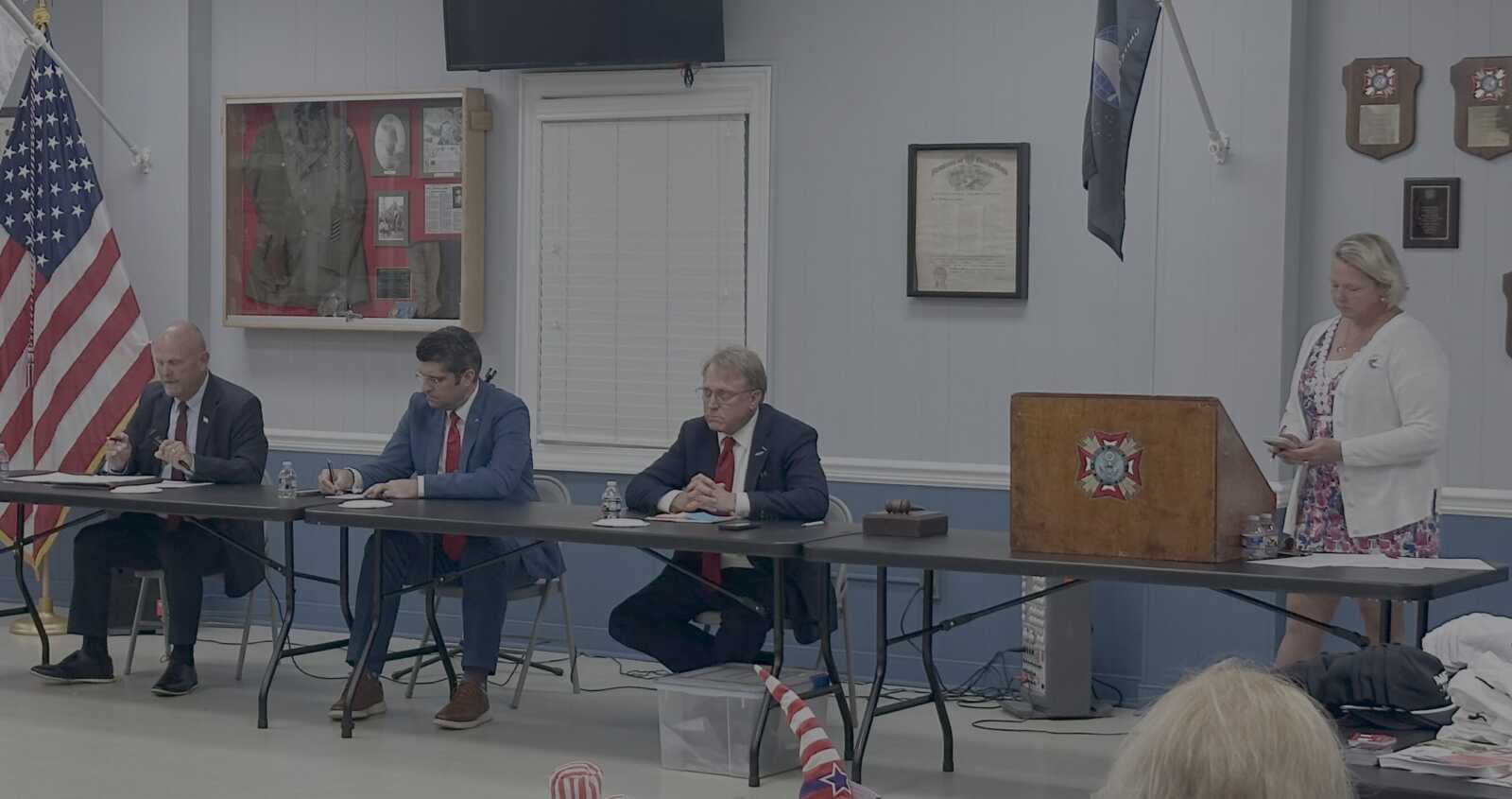
Republican candidates for Virginia’s 7th Congressional District faced off Wednesday evening, June 17, 2026, at a candidate forum hosted by the Fredericksburg GOP at VFW 3103 Post in Fredericksburg.
The 6:30 p.m. to 8:00 p.m. private, member-rented event drew local party members as the three contenders vying for the GOP nomination to challenge incumbent Democrat Rep. Eugene Vindman in November sought to distinguish their platforms.
The forum opened with a brief dispute over the recording, which was resolved after the candidates consented to the recording. It proceeded with a prayer, the Pledge of Allegiance, and the Republican Creed. Each candidate received three minutes for opening statements, followed by responses to 10 questions on key issues.
Candidate Introductions
Doug Ollivant, of Culpeper County, highlighted his 20 years of Army service, including two tours in Iraq, teaching at West Point, and White House work on Iraq policy under President Bush. A husband, father of seven, and grandfather, he moved to Culpeper in 2020 seeking semi-retirement but entered the race after Vindman’s election. His priorities: a manufacturing renaissance, better food for health, and energy abundance.
Phillip Harding, of Prince William County, described himself as a product of the American dream, a first-generation college graduate, Harvard student body president, and presidential fellow. A businessman and former associate pastor, he has worked in 30 countries helping people start businesses. He emphasized strengthening families and building together.
Rick Smithers, currently of Franklin County and planning to move to Culpeper if nominated, is a U.S. Army veteran who served in the 29th Infantry Division and the 101st Airborne Division. A pastor for 15 years and a blue-collar construction worker, he stressed people-focused service and being called to the race.
Ollivant currently leads in fundraising.
Key Issues
On federal spending and potential shutdowns, all three stressed avoiding shutdowns as a last resort while cutting waste and fraud. Smithers called shutdowns “a stupid strategy” and urged stewardship. Harding advocated budget discipline and innovation. Ollivant pushed for a balanced budget amendment and fraud reduction, noting impacts on federal workers and contractors in the district.
Candidates strongly supported Second Amendment rights and national concealed carry reciprocity. Ollivant compared it to driver’s license recognition across states. Harding and Smithers emphasized self-defense and lawful carry while respecting background checks.
Data centers and energy dominated discussion amid Northern Virginia’s grid strain. Ollivant said decisions belong at the local level but called for federal support of baseline power like natural gas, nuclear, and clean coal. Harding agreed on local control for data centers but supported federal energy innovation. Smithers warned of skyrocketing bills and water impacts, urging a moratorium and highlighting massive power demands.
On parental rights, all emphasized parents’ primary role. Smithers shared personal sacrifices for Christian schooling. Harding linked strong families to solving societal issues. Ollivant advocated school choice options.
Border security drew agreement on securing the border first while addressing labor needs in agriculture and hospitality through legal channels and prioritizing U.S. citizens.
Military topics focused on lethality, recruitment standards, veteran support, and passing the Major Richard Starr Act. Ollivant drew on his combat experience; Smithers on his service; Harding on transition support and Gold Star families.
On tax cuts and the deficit, candidates supported extending the 2017 tax cuts while cutting waste, fraud, and unnecessary programs. Ollivant tied health improvements to lower costs; Harding promoted business-like efficiency.
Election integrity discussions favored voter ID and in-person voting as the norm, with accommodations for military and disabled voters, while playing by current rules.
Closing Priorities
Smithers focused on people: lowering grocery, energy, and tax burdens. Ollivant prioritized the Major Richard Starr Act and long-term energy policy. Harding emphasized reducing regulations, empowering families and businesses, and attacking the debt.
Virginia’s 7th District, home to significant military installations and economic activity, will see early voting begin Thursday, June 18, 2026, ahead of the August 4 Republican primary. The winner will face Vindman in November.