
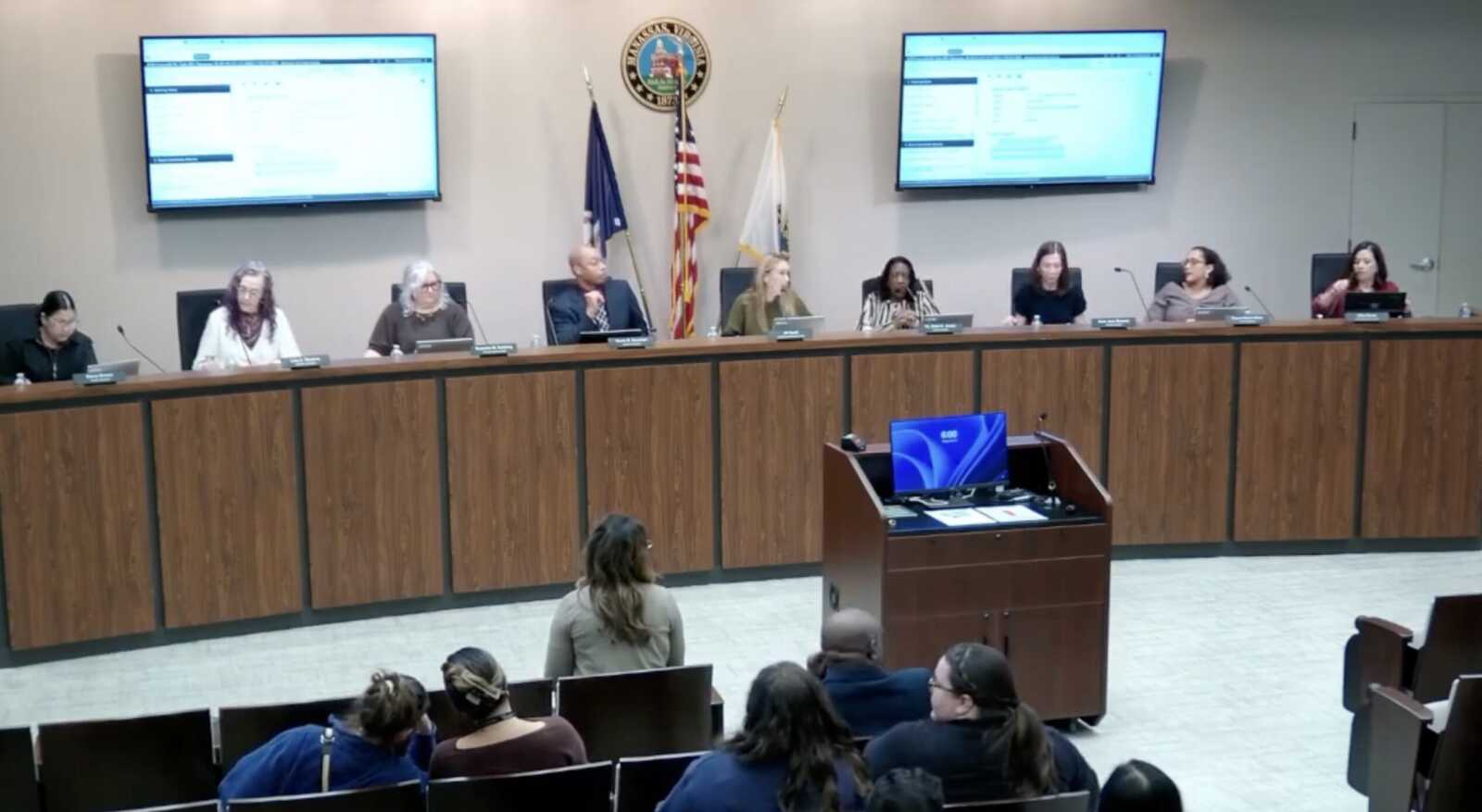
The Manassas City School Board on Tuesday, July 28, approved the 2026-27 Student Code of Conduct on a 6-1 vote, choosing a version with no explicit reference to artificial intelligence. The decision capped two weeks of discussion that began when Board Member Sara Brescia proposed clear language banning unauthorized use of tools such as ChatGPT.
Background from the July 14 Meeting
- Brescia recommended updates under the “cheating, plagiarism, and dishonesty” section stating that giving or receiving assistance on independent assignments includes unauthorized generative AI and that presenting AI-generated work as original constitutes plagiarism.
- She argued the change required no new software or spending, noting teachers have long detected plagiarism through traditional methods such as spotting similar essays or work that does not match a student’s known ability.
- Board Member Diana Brown raised concerns about enforcement. She stressed the need to first align any language with the division’s existing AI regulation and questioned whether teachers had adequate tools.
- Brown warned that without reliable detection software and clear processes, the policy could set teachers up for failure and students up for misjudgment, raising equity issues.
- Vice Chair Dr. Zella Jones said unauthorized AI use already qualifies as cheating under existing rules.
- Superintendent Dr. Kevin Newman suggested the board consider two versions of the code at its next meeting.
What Happened on July 28
Two options were presented:
- Option A: Contained no AI language.
- Option B: Included more detailed wording under cheating/plagiarism and electronic integrity referencing “misuse of AI or other digital tools.”
Brescia initially moved for Option B. Jones offered a substitute motion for Option A, seconded by Brown. After discussion, the board approved Option A 6-1.
Key Points of Tension
- The core disagreement was not whether AI misuse should be addressed, but how specifically it should appear in the Code given limited detection tools, teacher workload, equity concerns, and an existing 2024 regulation.
- Regulation IIBEA-R-1 (Use of Generative AI in School Settings) defines appropriate functions for generative AI and directs teachers and staff to distinguish between applications that support learning and “improper uses as defined in the MCPS code of conduct.” Several members noted Option A provided no such definition.
Board Member Positions
- Lisa Stevens: Referenced the regulation and Policy IIBEA-GAB-M. Asked whether staff were receiving training on identifying student AI use. Newman said there had been no specific division-wide course. Stevens also cited a prior conversation about detection software that showed roughly a 50 percent error rate (including flagging a fully human-written document as AI-generated). She expressed concern about the practical difficulty for teachers.
- Dayna-Marie Miles: Raised strong concerns about detailed AI language without reliable detection tools. Argued grading is already subjective and that adding AI accusations without clear verification could open the door to discrimination or unfair accusations. Preferred the simpler Prince William County approach (“unauthorized use of artificial intelligence”).
- Sara Brescia: Remained the strongest advocate for including explicit AI language. Said she could support simpler wording such as “unauthorized use of AI.” Called it “bizarre” that the board would adopt a Code with no AI reference when the regulation clearly delegates the definition to the Code. Described software detection as a “red herring” and compared it to traditional plagiarism and the dress code.
- Dr. Zella Jones: Expressed discomfort with creating an Option C on the fly. Preferred voting on the two prepared versions and raised concerns about printing and distribution timelines for any August 11 revision.
- Suzanne Seaberg: Offered a minor typo correction applying to both versions: “students must maintain academic integrity at all times.”
Outcome and Next Steps
- The board voted on Option A as the motion on the floor. It passed 6-1.
- Several members acknowledged the possibility of returning with an Option C (simpler AI language) at the August 11 meeting before students return, though printing timeline concerns were noted.
- Chair Jill Spall said AI is a frequent topic in conversations she has had and that she would have liked to see the word “AI” appear in the Code of Conduct. She stood by her vote but wished there had been more time to refine the language.