

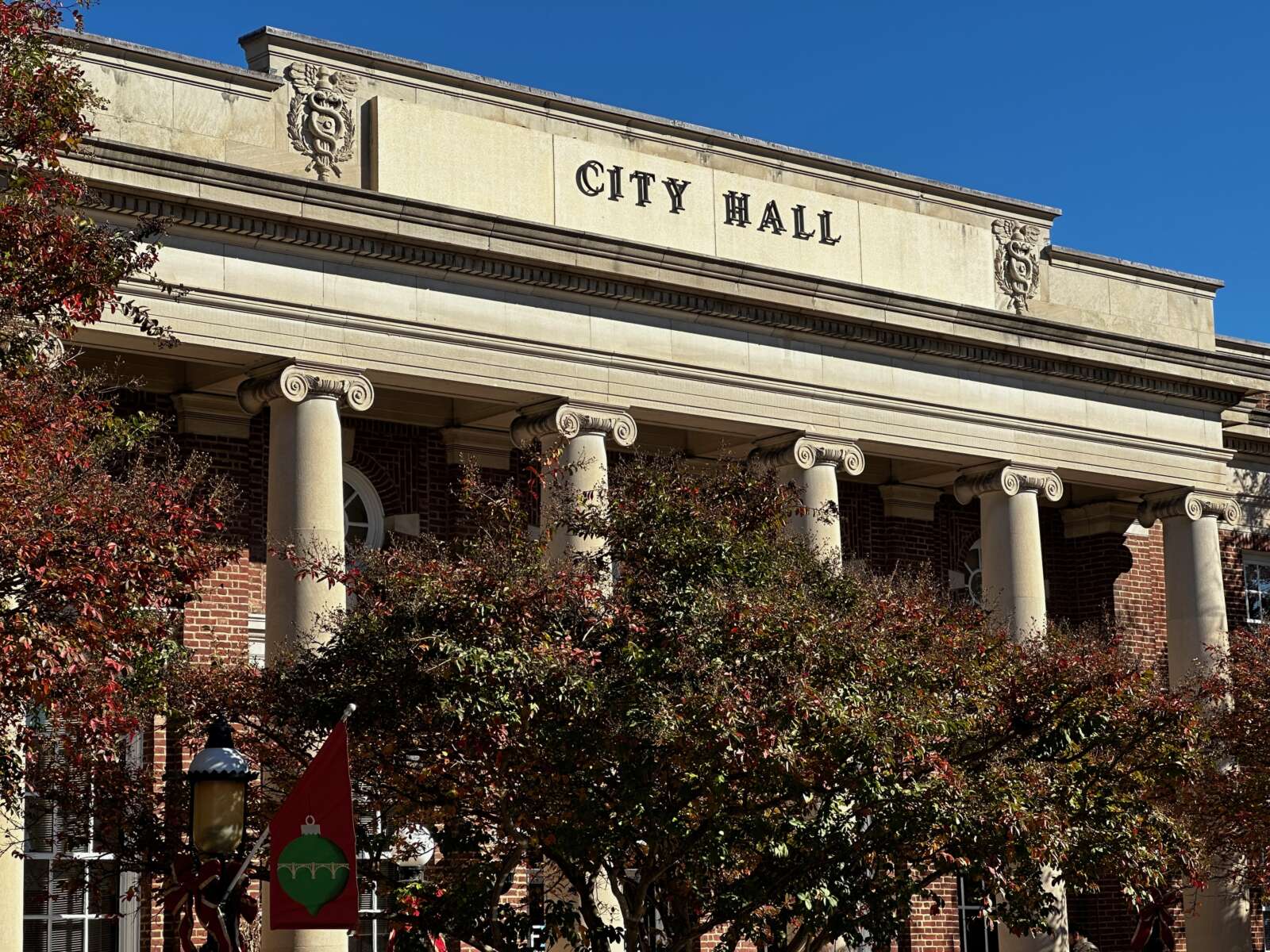
Barbara Saunders, a retired Fredericksburg public school teacher living on Pony Drive, opened her latest property tax bill with a familiar sense of dread.
At $4,980 already, her real estate taxes are set to climb again under the City of Fredericksburg’s proposed FY2027 budget. In a written letter read aloud at the April 21 City Council meeting, the senior citizen described the cumulative impact: a 0.4-cent increase last year, followed by the proposed 0.5-cent hike this year, for a total 0.9-cent jump over two years.
For her alone, that means an extra $249 in the coming cycle — and $448.20 over the past two years.
“I truly live on a fixed income that is being impacted more and more by rising costs of everything recently,” Saunders wrote. “A retired person on a truly fixed income gets the same amount of Social Security… There are no adjustments to income, so a rise in taxes or utility fees comes from the same strained wallet as last year.”
Her water bills have already jumped since the city installed new meters, she added, and now another round of increases looms. Saunders, who taught alongside Mayor Kerry Devine years ago in Stafford County, pushed back on the notion that teachers enjoy the same fixed-income protections. She noted step raises, cost-of-living adjustments, and competitive salary bumps that active educators still receive — benefits retirees no longer see.
Saunders was not alone. Though the April 21 public hearing on the $141.4 million general fund budget drew passionate testimony about schools, homelessness, and equity, written comments and the broader context of the meeting underscored growing anxiety among fixed-income residents. With groceries, gas, and everyday expenses climbing, many seniors in this historic city say they are being asked to shoulder more while city leaders tout modest overall growth and targeted investments.
The proposed changes, effective July 1, 2026, include raising the real estate tax rate from 80 cents to 85 cents per $100 of assessed valuation, plus the unchanged 1-cent fire tax, for a total of 86 cents. Water fees would rise by 8 percent, sewer fees by 6 percent, and water and wastewater availability fees by about 8 percent. Separate public hearings on those items drew written opposition — including Saunders’ letter and another from River Road resident John Walker questioning availability-fee definitions — were entered into the record.
City officials framed the increases as necessary to balance the budget while continuing to support core services. Finance Director Amanda Six told council the general fund is recommended at $141.4 million — a 3.3 percent increase over the prior year — with education and public safety making up roughly 52.6 percent of expenditures.
The city’s contribution to Fredericksburg City Public Schools would total $45.9 million, including a $37.97 million operational transfer (up $750,000), $7.6 million in debt service tied to the new middle school, and a $350,000 capital-fund transfer.
Real property taxes remain the largest revenue source, accounting for about 36 percent of the operating budget. Officials also highlighted diversification through the meals and lodging tax, which brings in roughly $20 million annually — about 14 percent of the budget — thereby shifting some of the burden to visitors rather than residents.
Yet for seniors like Saunders, the numbers feel personal. Property values have risen in recent years, but so have assessments and now the real estate tax rate. Combined with utility hikes, the changes compound the pressure on households that cannot simply earn more to offset them.
Council members heard contrasting voices during the hearing. Several parents and Special Education Advisory Committee members, including Kimberly Bastrous, Melanie Roth, and written letters from Sarah Moran, Whitney Kite, Leah Courtnosch, and Quincy Click, urged full funding for additional special education staff. They cited a nearly 60 percent increase in special education students over five years (from 331 in 2021 to 528 today), low teacher retention (71 percent, compared with the state average near 91 percent), and persistently low academic rankings.
Advocates for the Thurman Brisbane Center, including Chris Payton and Steve Flanagan, thanked the council for restoring $40,000 in funding for family homelessness services and stressed the human cost to children. Legal Aid Works Executive Director Ann Kloeckner requested level funding, noting the organization’s role helping 3,959 eligible low-income city residents.
NAACP Fredericksburg representative Sabrina Johnson supported a tiered water and sewer rate for large corporate users but warned that including apartment complexes could lead to rent pass-throughs for low-income Black and Brown renters already spending 30 to 50 percent of their income on housing. “Equal is not equity,” she said.
Before diving into the budget, the council quickly approved a technical amendment on personal property tax relief. Deputy City Manager Mark Whitley explained that the state block grant of roughly $1.7 million allowed the relief percentage for spring 2026 billing to rise from a modeled 22 percent to 23.25 percent — delivering slightly more relief than initially planned. Mayor Kerry Devine called it “good news for taxpayers.”
Vice Mayor Charlie L. Frye, Jr. disclosed that his wife is employed by the Fredericksburg City Public Schools, and Councilor Jannan W. Holmes disclosed that she provides contract mental health services to the city schools. Both officials stated that they could participate in the budget discussion fairly, objectively, and in the public interest.
The meeting followed standard procedure in Council Chambers at 715 Princess Anne Street: invocation, Pledge of Allegiance, and public comment rules. The budget process began on March 10, with work sessions leading to the April 21 hearing. First reading is scheduled for next week, with final adoption targeted for May 12.
For many residents, the debate boils down to priorities. City leaders point to investments in education, debt from capital projects, and steady service delivery in a competitive Northern Virginia region. Seniors on fixed incomes counter that their wallets have limits — and that every cent counts when Social Security checks and pensions don’t stretch as far as they once did.
Saunders closed her letter by recalling a recent video from Councilor Will Mackintosh celebrating a healthier-than-expected financial picture and new hires. “I did not realize that it was going to be at the expense of… increases in taxes that come directly from citizens’ pockets,” she wrote. “I ask that you please consider the impact that this additional tax and also the increased water fees will have on citizens, especially given the significantly more extensive groceries, gas, and life in general we are experiencing.”
The Fredericksburg City Council will take the next formal step on the FY2027 budget and tax increases during a work session at 5:30 p.m., followed by its regular meeting at 7:30 p.m. on Tuesday, April 28, 2026. That meeting is expected to include the first reading of the proposed budget and tax ordinances.
A second reading of the new ordinance, a formal adoption, is scheduled for Tuesday, May 12, 2026.
