
 A waitress at Dixie Bones BBQ in Woodbridge.
Updated 10:30 p.m. – Local restaurant owners are voicing strong opposition to Prince William County’s meals tax, which is set to generate $42 million in Fiscal Year 2025—an increase of $10 million, or 31.25%, from the previous year.
Prince William County Board of Supervisors Chair At-large Deshundra Jefferson has signaled the meals tax will be discussed during the annual budget process this spring. “It would like to see a partial repeal of the meals tax, but it truly depends on our proposed budget for the next fiscal year,” Jefferson told Potomac Local News.
The meals tax, enacted in 2022, has been a consistent contention among business owners, who argue it places additional strain on their already tight profit margins. Inflation, staffing shortages, and rising costs for food, rent, and utilities have made operating a restaurant more expensive, and many owners believe the meals tax exacerbates these challenges.
Nelson Head, owner of Dixie Bones BBQ in Woodbridge, expressed frustration with the tax, stating, “You say you want to support small business in the county, but you’ve attacked some of the key small businesses by making their food so expensive no one is buying it.”
Jeff Frederick, owner of Beer Republic Brewery in Woodbridge, also criticized the tax, saying, “Reducing or eliminating the meal tax in [Prince William County] would be a boon for our business – but more importantly for our tipped employees, who are the ones that suffer the most from this tax that none of our neighbors to the north or south have, which puts [Prince William County] businesses at a competitive disadvantage. Make up the difference from data centers or other tax sources that won’t hurt small businesses like ours.” He also called for a referendum, adding, “The voters soundly rejected the meal tax every time it’s been put before them – our elected reps shouldn’t be usurping their will and doing it anyway. At the least, perhaps, put the meals tax up for an advisory referendum in this fall’s election.”
Tommy Herbert, Director of Government Affairs at the Virginia Restaurant, Lodging, and Travel Association, emphasized the financial burden the tax places on local businesses, stating, “Since restaurants operate nationwide at about a 3-5% profit margin, a 4% tax like Prince William has means that on any restaurant transaction, the government is making around as much money as the actual restaurant is.”
Herbert also noted that meal taxes disproportionately affect lower-income residents, citing USDA data that shows lower-income households spend a higher percentage of their total income on food than wealthier households.
Prince William County is not alone in having a meals tax—neighboring Stafford County and Manassas City also impose a similar tax. At the same time, Fairfax County has struggled to implement one despite years of discussion.
Supervisor Boddye Defends Meals Tax
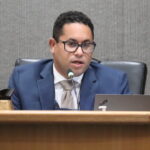
After the initial deadline for this story, Occoquan District Supervisor Kenny Boddye responded, defending the meals tax as a necessary tool for funding essential services while limiting the tax burden on residents.
“Much like my work to increase the data center tax rate, my support of the meals tax reflects the critical effort to diversify revenue streams and lessen the residential tax burden — during the last two years, the average residential bill has only risen by $31, even as this Board delivered record investments in schools, public safety (increasing police pay by over 20%), parks, and mobility,” Boddye said.
He also argued that the tax allows county residents to benefit from visitors, particularly in commercial hubs like Potomac Mills and Virginia Gateway, stating, “Customers pay the tax, and around attraction nodes, nearly half of restaurant-goers live outside of the County.”
Boddye challenged the claim that the tax harms local restaurants, pointing to county revenue data. “Receipts data since meals tax adoption in 2022 shows consistent growth for our restaurants. In Q2 FY 2024, staff had to revise their initial revenue meals tax forecast from $32M to $42M, which delivered an additional $5.75M for our schools. People remain drawn to the many enticing dining and entertainment options in our community.”
While the Board of County Supervisors deliberates its Fiscal Year 2026 budget, the meals tax remains a key issue. No other county supervisors responded to requests for comment. A final decision is expected in April.