

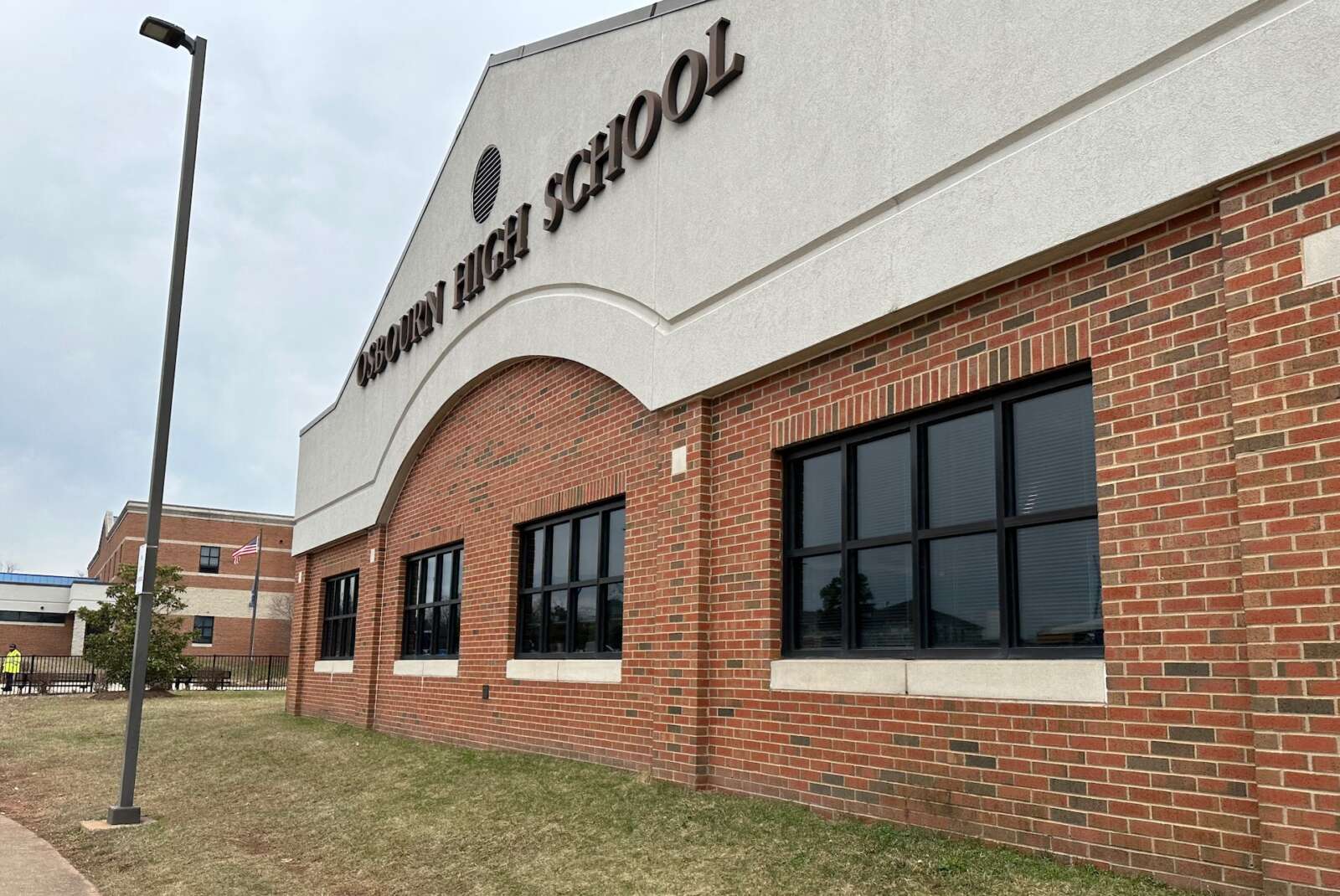
Manassas City Public Schools face increased scrutiny over falling student performance and a contentious grading policy as the November election approaches. During a recent town hall hosted by Potomac Local News, candidates for the city’s school board and concerned residents discussed the troubling decline in Standards of Learning (SOL) scores and how the division’s grading practices may exacerbate the issue.
In the past year, SOL scores for Manassas students have significantly dropped, leaving the school division well below state averages. Two of the city’s schools, Osbourn High School and Metz Middle School, remain partially accredited under pandemic-era standards and struggle to meet performance benchmarks. Caitlyn Meisner, our Manassas Local Editor, covering the school board for Potomac Local News, has followed the downward trend closely since late 2023.
“Since I started covering Manassas schools in December 2023, I’ve seen how the SOL scores have declined, and it’s been a consistent concern among school board members and the community,” said Meisner during a forum held online on October 17. “Manassas is falling behind state averages, and while standardized tests don’t always tell the full story, the drop in scores over the past few years is alarming. It’s clear that the challenges we’re seeing are broader and have persisted despite efforts to improve.”
Compounding the issue, the school division’s current grading policy, which allows students to retake tests multiple times and submit assignments as late as the end of the semester, has sparked heated debate. While the policy aims to support students facing challenges, some argue that it lowers academic expectations and inflates grades, ultimately failing to prepare students for life after school.
“Our current grading policy doesn’t go far enough to set students up for success,” said school board candidate Javanese Hailey, a former Manassas teacher. “Right now, students are picking and choosing which assignments to complete because they know they have time to make up for missed work. It’s creating a culture where they don’t learn the importance of meeting deadlines or putting in consistent effort.”
Dayna Jackson-Miles, another school board candidate and an ESOL teacher, echoed these concerns. “In college or the workplace, you don’t get multiple chances to turn in your work. This policy is doing our students a disservice by not teaching them accountability,” she said. “We need to rethink how we’re preparing students for the next step, whether that’s higher education or entering the workforce.”
The grading policy was introduced with the intent of providing equitable opportunities for students, particularly those facing language barriers or difficult home environments. However, many believe it has created a system where students are not held accountable for missing assignments, leading to inflated grades and a decline in academic rigor.
“Teachers are struggling because the system doesn’t support them in enforcing deadlines,” Hailey noted. “Students realize there are little to no consequences for missing work or failing tests, which undermines the learning environment for those who are trying to succeed.”
As the November election approaches, school board candidates are promising to revisit the grading policy and address the deeper issues affecting academic performance in the city’s schools. Some propose tightening the grading system with stricter deadlines and limits on test retakes, while others advocate for targeted interventions to help students struggling to meet academic standards.
With four school board seats up for election, the future of Manassas City’s education system may depend on the decisions made by the new board.
Election Day is November 5. Early voting is currently underway at the Registrar’s Office at City Hall.
