

George Washington’s mother, Mary Ball Washington, died in 1789 and was buried in Fredericksburg near a monument that resembles the Washington Monument but on a lesser scale.
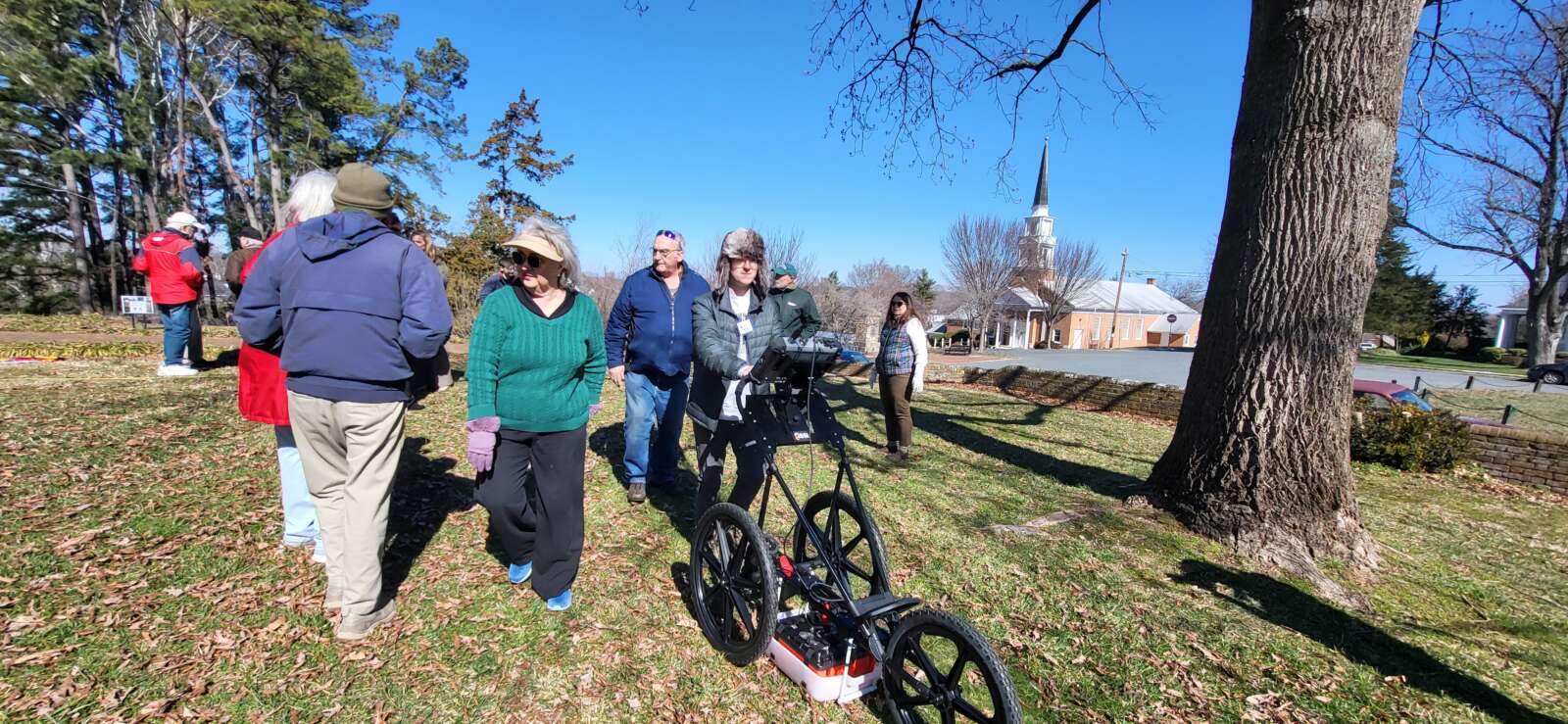
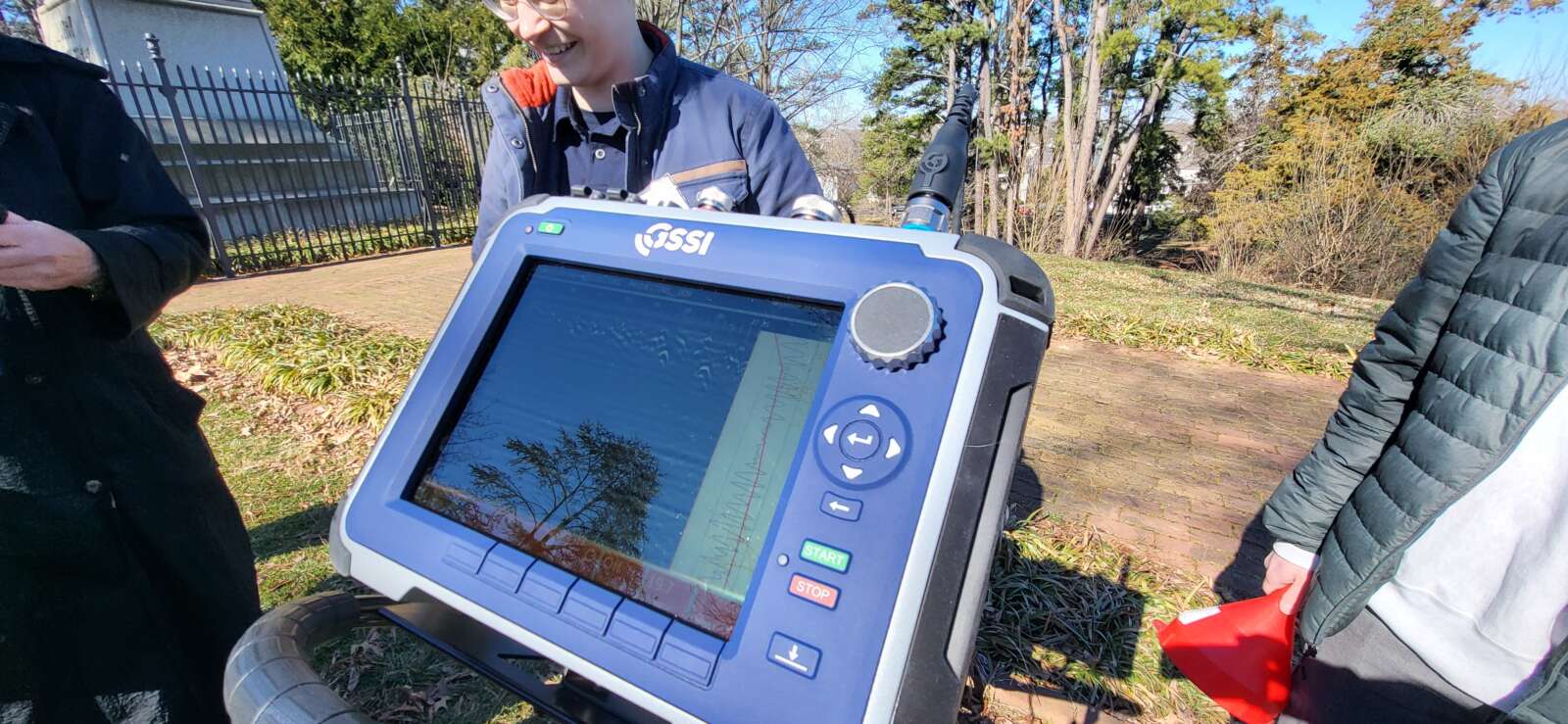
The exact location of the actual grave remains unknown though, so in steps the GSSI Ground Penetrating Radar apparatus manned by historians from Washington Heritage Museums and a professor from Mary Washington University to investigate this colonial mystery.
The radar system looks like a cross between a walker for the disabled and a football field measuring system.
“We won’t see individual bones,” said Dr. Katherine Parker, a professor with the Department of Historic Preservation at the University of Mary Washington. Parker was out to the site on President’s Day with a few students testing out their new tool. “This is our first project with this, it’s faster, and we don’t have to dig.”
The monument was dedicated on May 10, 1894, near Mary Ball Street and Kenmore Avenue, aside another old cemetery in downtown Fredericksburg. Since there was no headstone placed when Mary Ball Washington was buried just over 100 years earlier, “it is reported to be near the sandstone outcropping now known as Meditation Rock,” states a historical Washington Heritage Museums pamphlet.
Construction of the monument began in the 1830s but was only partially finished, which angered a group of local women who formed the Mary Washington Monument Association and raised enough money to buy the site.
When the monument was finished in 1894, thousands gathered at the dedication, including one of the speakers, President Grover Cleveland. Other presidents who have visited this site include Andrew Jackson and Dwight D. Eisenhower, who laid a wreath at the monument in 1954.
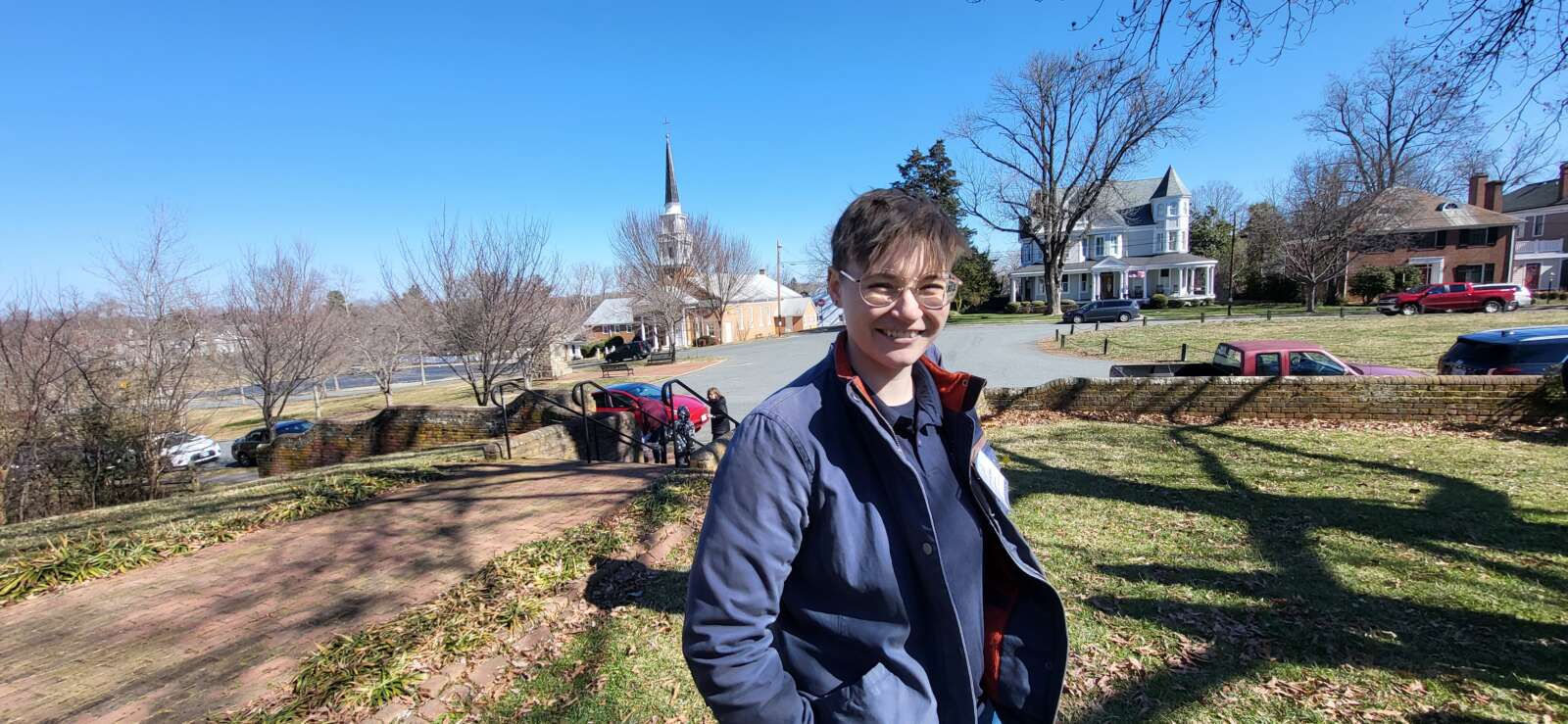
MWU student Blake Bauer and Professor Parker were on site, operating the GSSI. He majored in historic preservation and considered this experience “a once-in-a-lifetime opportunity,” he said. “It’s very science-ee” he added.
GSSI stands for Geophysical Survey Systems, headquartered in Nashua, New Hampshire. They have customers all over the world, and their mission is to “help customers solve their subsurface visualization challenges with ground penetrating radar equipment.”
The GSSI technology is used to check the structural health of roads, bridges, and skyscrapers to study the thickness of glaciers, their information stated.
On the President’s Day trip to the site, they found several possible places that may be a grave, but there was no digging that day. It will take further research and approvals before any action is taken.
