

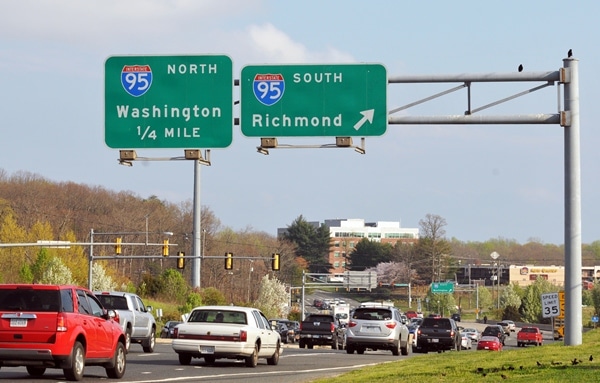
The traffic signals on Route 610 in North Stafford are talking to each other better now, according to the Virginia Department of Transportation.
VDOT recently completed a project to upgrade traffic signal communications and timing along the Route 610 (Garrisonville Road) corridor in North Stafford.
The project coordinated 16 traffic signals over about four miles between the Interstate 95 southbound off-ramp and Furnace Road to reduce driver delay and vehicle emissions.
New fiber and radio communications equipment was installed. This allows VDOT to quickly and remotely adjust traffic signal timings in response to emergency incidents and to remotely monitor signal operations.
The transportation agency says traffic signal retiming and coordination is a cost-effective way to improve traffic flow along a corridor. Intersections with traffic signals along Route 610 in the project limits have been optimized in coordinated timing plans for weekday morning, midday and afternoon hours and on weekends.
Although your mileage may vary based on congestion, once drivers receive a green signal, the goal is for vehicles to proceed through the corridor with minimal stops and reduced idling.
The project also aimed to improve safety, as fewer vehicle stops can reduce the probability of rear-end crashes. Signal clearance interval lengths were updated along the corridor to current VDOT standards, resulting in longer yellow and red signal times, which helps reduce the likelihood of crashes at intersections.
They’ll also be less stop-and-go traffic, resulting in an estimated annual reduction of emissions in the following amounts:
- 15,025 pounds of carbon monoxide
- 2,322 pounds of volatile organic compounds
- 774 pounds of nitrous oxides
Due to the new signal corridor plan, Route 610 travelers as a collective group are expected to save an estimated $74,100 annually in fuel expenses, says VDOT.
The timing of traffic signals on primary roads in the area is reviewed at least once every three years, and makes spot adjustments as needs are identified, adds VDOT.
