

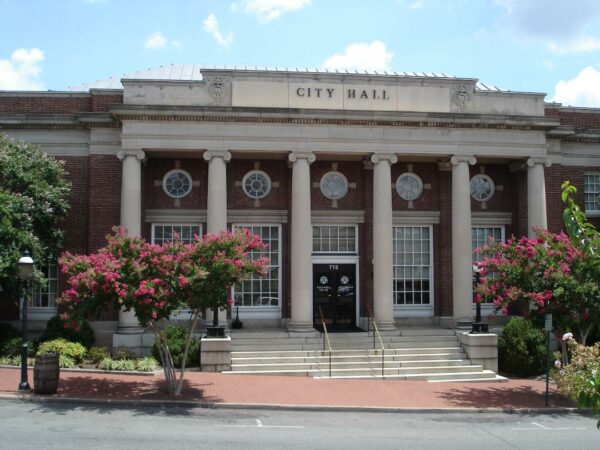
Fredericksburg leaders are looking at reducing the amount of taxes some businesses pay in hopes to bring more creativity to the city.
They’re looking at expanding its Arts and Culture District, which currently stretches between Lewis and Fredericks streets, and up to Lafayette Boulevard and Willis Street in downtown.
The city is looking to reduce the types of businesses in this area from four to two, those being “arts and cultural businesses, whether new, expanding, or existing” and “non-arts businesses that host year-round, rotating art exhibits,” city documents state.
Such businesses that qualify for the program include dance, media arts, music, sculpture, museums, performing arts, theater, and opera. The program is also open to any businesses in the district that are not arts and culture related.
If approved at the next City Council meeting on October 6, the measure would also reduce up to $250 the business license, or BPOL tax for shops in the district.
For example, if a business had $100 in BPOL taxes, it would end up paying zero because of the reduction. If another business had $300 in BPOL taxes, the reduction would mean it would owe $50, said city economic development director Bill Freehling.
Councilman At-Large Matt Kelly noted during the meeting that this was a “fine” step in promoting arts and culture in Fredericksburg and felt it might be possible to do more.
The existence of the Arts and Culture district came as a result of a bill passed by the Virginia General Assembly in 2009. HB 1735 authorized any Virginia locality to create the districts for the purpose of increasing awareness and support for their arts and culture communities and provided regulatory flexibility and tax incentives to any locality participating in the program.
Fredericksburg was an early adopter of this program in 2010.
The proposed expansion comes as the city was recently carved out a creative maker district that would encourage the growth of small businesses such as small manufacturing and arts businesses.
