
When it comes to protecting our election from those who would do harm, general registrars and volunteer poll workers are on the front lines.
“Communication has been at the forefront to get ahead of mis or disinformation campaigns,” said Daniel Persico, chief information officer at the Virginia Department of Elections.
If people see information on social media about changes in polling places or dates of elections, Persico urged readers to be skeptical and verify the source, or call a local elections office to very the information.
“Don’t always trust everything you see. If it doesn’t sound right, look into it,” he adds.
Locally, elections officials are expecting a crush of voters for the General Election on November 3. Prince William County is calling for 1,600 volunteers to work 93 polls and will open eight satellite offices for two weeks leading up to Election Day for early voting.
Despite all of the talk about mail-in ballots, the safest way to vote is still in person, at the ballot box.
“We need to go back to the [hand-marked] paper ballot, use computers to verify the results, and then use humans to complete a risk-limiting audit,” said Harri Hursti, an international cybersecurity expert featured in the HBO documentary “Kill Chain.”
Hursti added mail-in ballots are the second-most secure form of voting because of the secure method of processing ballots and said touch-screen voting systems are the most vulnerable to hacking, and that they shoud not be used.
If an election system is hacked, it can take up to 300 days to identify the problem, and another 50 days to report the breach, he said. “Every voting system we have today, and every system we will have in the future, can be hacked,” said Hursti.
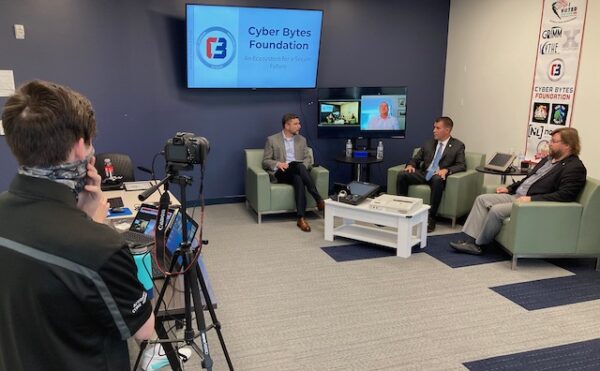
The comments come as Quantico Cyber Club hosted a discussion on protecting the election at its headquarters at the Quantico Corporate Center in North Stafford on Thursday, August 27. The discussion marked a post-coronavirus pandemic return to in-person events for the non-profit organization focused on cyber securtiy education and collaboration.
Intensive training, “bootcamp” style courses in cybersecurity trianing are offered at the 30,000 square-foot centers, which opened a year ago. The non-profit manging the center, the Cyber Bytes Foundation, aims to become a degree-issuing insitutution.