

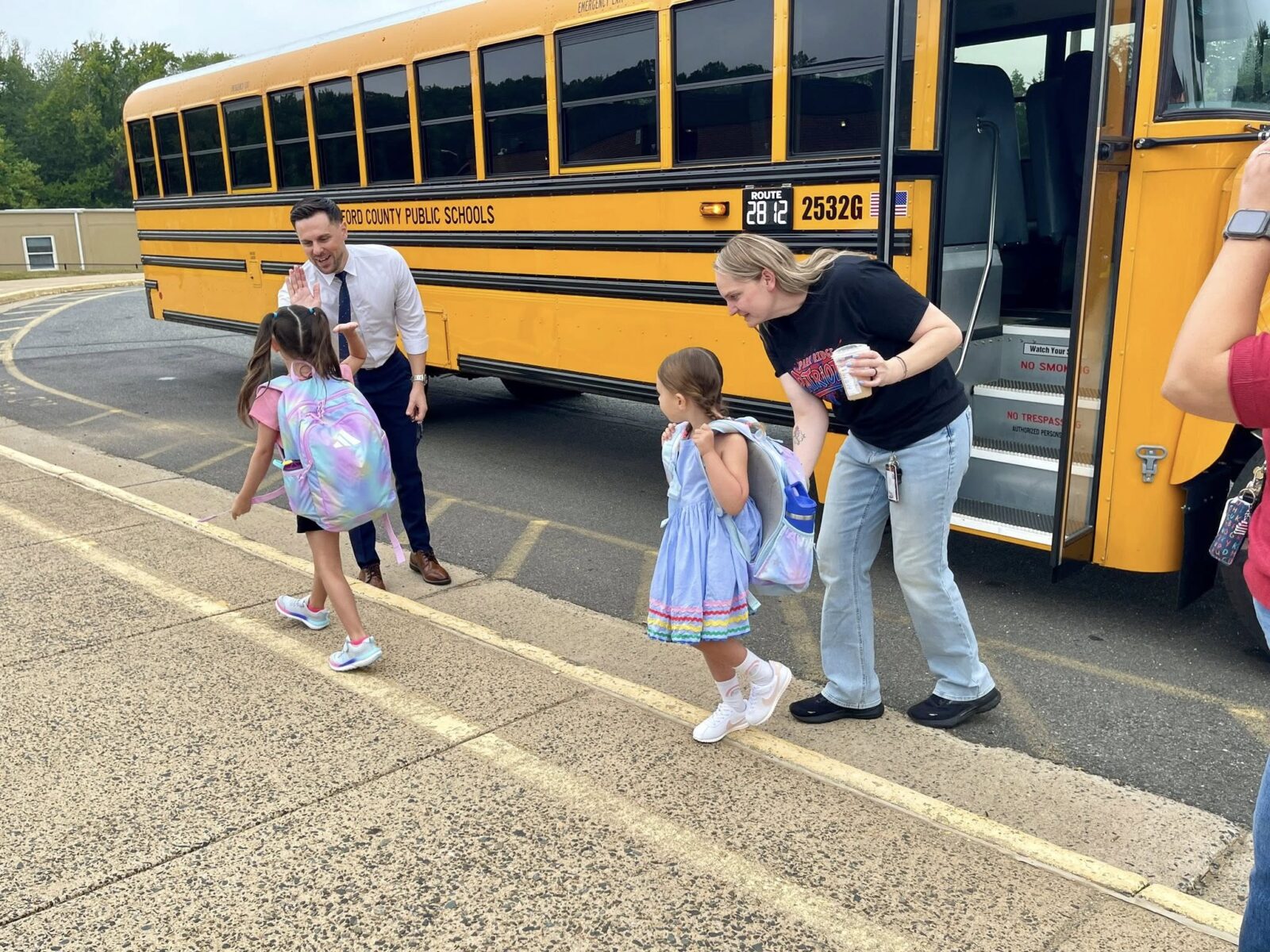
Stafford County voters will decide Nov. 3 whether the county may levy an additional local retail sales-and-use tax of up to 1 percent, to be used only for construction of new schools or major renovations of schools serving Stafford.
The official ballot question reads: “Shall Stafford County, Virginia levy a local retail sales tax not to exceed one percent (1%) to provide revenue that can only be used for construction of new schools or major renovation of schools serving Stafford County, with such tax ending (1) upon repayment of any bonds or loans issued for the projects, or (2) if the projects are not funded by bonds or loans, on June 30, 2046?”
It is a new local tax on top of the existing sales-tax rate, not a redirect of current sales-tax dollars. Grocery food, prepared food, and personal hygiene products are exempt. County staff estimates annual revenue of $13 million to $20 million. A full 1 percent on all taxable sales was estimated at nearly $25 million; the lower working range reflects the carve-outs.
If voters approve, the Board of Supervisors must still adopt an ordinance. Officials have pointed to a possible July 1, 2027 start after a winter public hearing. The money cannot pay salaries, operations, or debt issued before July 1, 2027. It can pay later school-construction debt or reduce future borrowing.
The Stafford Board of Supervisors placed the question on the ballot July 7, in a 5–2 vote. Circuit Court entered the order July 20.
Stafford schools spokeswoman Sandra Osborn said the division faces substantial needs for school construction, replacement, renovation, and modernization. The School Board’s FY27 Adopted Capital Improvement Plan identifies more than $1.9 billion in school capital project costs (though not every project may be eligible for the proposed tax), including about $1.7 billion for major projects and $224.8 million for repair, replacement, and renovation. Seventeen additional school projects remain unfunded in the county’s FY27 CIP.
“The referendum gives voters the opportunity to consider a dedicated funding source for eligible school capital projects,” Osborn said.
Virginia opened the option to every locality in the 2026 state budget. Earlier versions had stalled, including a veto by former Gov. Glenn Youngkin of a prior bill. Sen. Jeremy McPike (D-Prince William) was among the patrons. Local voters must still approve it.
Prince William County did not place a matching referendum on the Nov. 3 ballot.
Meghan C. Silas, county schools spokeswoman, said the new state legislation creates a potential funding option for school capital needs. Pursuing a referendum, however, “requires significant coordination and agreement between the School Board and the Board of County Supervisors, as well as extensive public engagement regarding the proposed tax, the capital projects it would support, and its impact on the community.”
“Given the timing of the legislation and the actions required to place a referendum on the November 2026 ballot, including action by the Board of County Supervisors to initiate the referendum and completion of the required legal and election processes, it was not feasible to undertake the level of analysis, collaboration, and public engagement that such an important decision warrants this year,” Silas said.
She added that because the authority was enacted through the state budget process and the General Assembly may revisit or amend the legislation, “we believe it is appropriate to allow time for greater clarity at the state level and for thoughtful discussion locally before determining whether to move forward with a future referendum.”
PWCS instead continues to rely on its Capital Improvement Program, bonds, and other approaches. The School Board voted in February 2026 to cancel plans for a 14th high school, citing projected enrollment declines and construction costs that had risen above $336 million.
