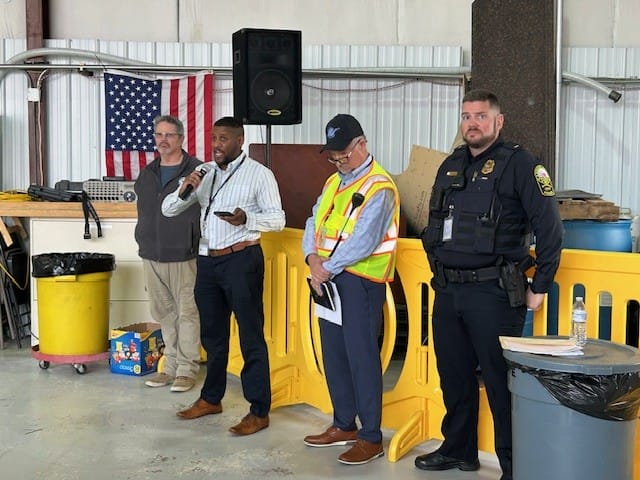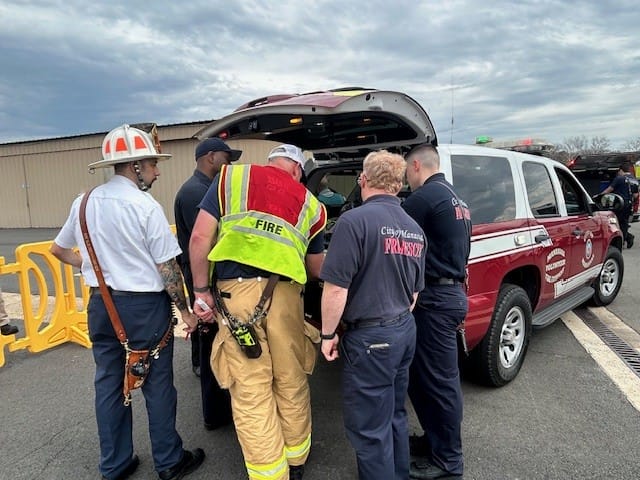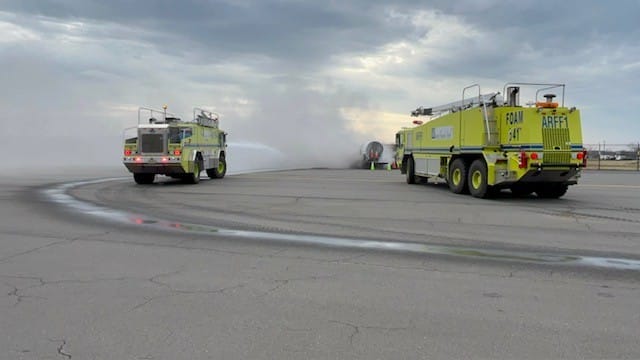
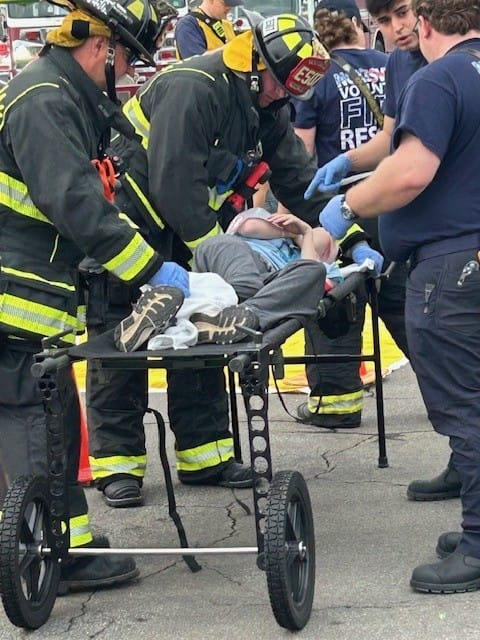
Manassas Regional Airport successfully completed its first Full-Scale Exercise on March 11 to test the Airport Emergency Plan (AEP), a key step in maintaining readiness and supporting its path toward commercial passenger service.
The drill, required under 14 CFR § 139.325 by the Federal Aviation Administration for Class I airports, must occur at least once every 36 consecutive calendar months. It simulated a realistic scenario involving coordination among multiple agencies to ensure effective response capabilities.
Participants included the Airport Rescue Fire Department (ARFF), City of Manassas Fire & Rescue, City of Manassas Police, City of Manassas Dispatch, and Public Information Officers from the City of Manassas, the Airport, the Manassas Police Department, and the Virginia Department of Emergency Management. Additional support came from mutual aid partners, including Prince William County agencies, PWC Dispatch, and the Virginia Department of Emergency Management.
To heighten realism, student actors from Colgan High School participated, helping create a dynamic training environment for responders.
Often called the “Tri-Annual” exercise, this mandatory drill is essential for maintaining a Part 139 Airport Operating Certificate, which allows for higher passenger volumes not yet in use at Manassas Regional Airport. Although the airport has not yet received its official Airport Operating Certificate (AOC), it is operating toward that standard and has a second FAA inspection scheduled in the May/June timeframe.
The full-scale exercise, planned for nine months, tested regional coordination, communications, public information, aircraft rescue and firefighting, and mass casualty triage—directly supporting the airport’s broader goals for growth.
Background on Airport Progress
Manassas Regional Airport continues incremental advances toward becoming a commercial airline facility. Plans for passenger service, originally targeted for 2026, have been delayed as the timeline proved too aggressive. However, the airport secured nearly $1 million in federal funding through the FY 2026 Transportation, Housing and Urban Development Appropriations Bill for critical airfield infrastructure upgrades essential to future commercial operations.
This funding is part of larger FAA allocations totaling $22 billion, including $13.8 billion for Operations, $4 billion for Facilities and Equipment, $290 million for Research and Development, and $4 billion for Grants-in-Aid for Airports—supporting 2,500 new air traffic controllers and nationwide system modernizations.
Current projects include final design stages for a new air traffic control tower (estimated $18-20 million), widening Taxiway Bravo, and upgrading airfield lighting to LED. “There’s always things in the works,” said Assistant Airport Director Jolene K. Berry.
Longer-term proposals—such as a runway extension to handle Boeing 737-800 aircraft and a new standalone terminal—remain under consideration but lack firm dates or complete funding.
In the big picture, a more commercial airport would be a significant step forward as the city grows alongside Prince William County.