
The Virginia Department of Health (VDH) announced that it is partially lifting a recreational water advisory for the Potomac River, effective immediately.
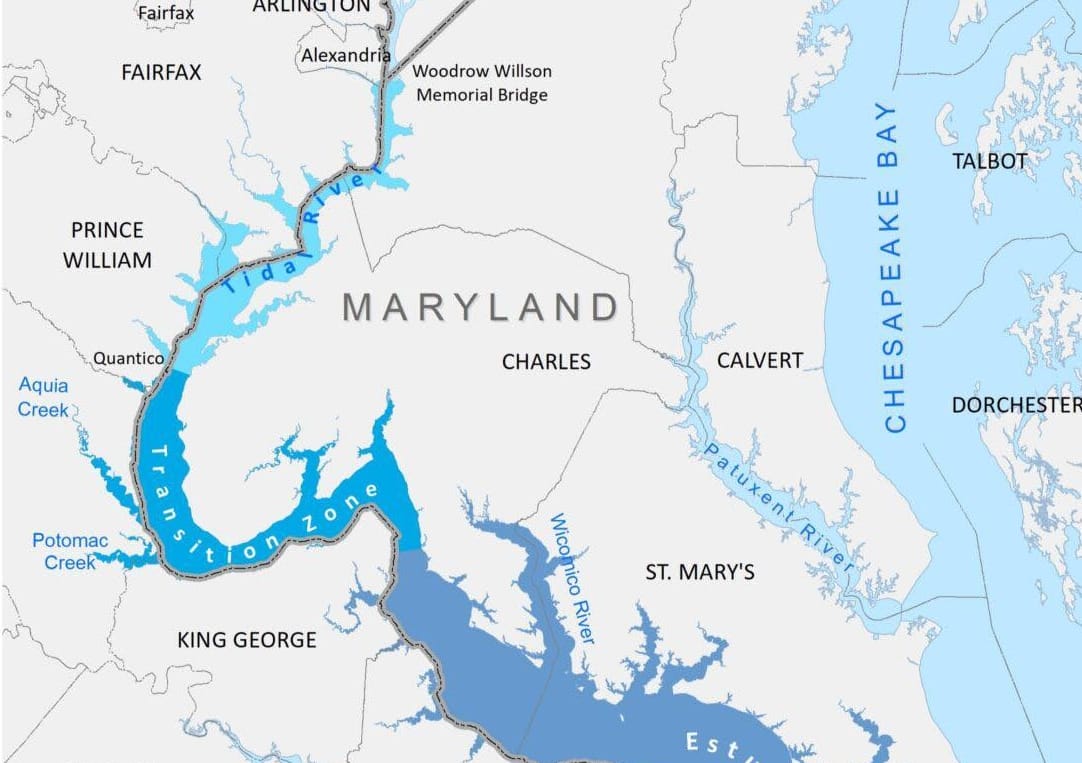
The change applies to the stretch from the Route 120 Chain Bridge to the Governor Harry W. Nice Memorial Bridge (Route 301) in King George County, which includes key local areas in Woodbridge and Stafford. This development comes after weeks of monitoring following a major sewage spill upstream, providing relief to residents and businesses reliant on the river for recreation.
The advisory remains in effect for the upstream 4.7-mile segment from the American Legion Memorial Bridge (I-495) in Fairfax County to the Route 120 Chain Bridge. In this area, water quality sampling by the Washington DC Department of Energy and Environment and DC Water continues to show elevated E. coli levels near the original spill site. VDH advises Virginia residents to avoid recreational activities such as swimming, wading, tubing, white-water canoeing, or kayaking in this section, where full-body submersion is more likely.
Pets should also be kept away from the water for safety.
Background on the Sewage Spill
The advisory stems from a significant infrastructure failure that began on January 19, 2026, when a 72-inch section of the Potomac Interceptor sewer line, operated by DC Water, collapsed near Clara Barton Parkway in Montgomery County, Maryland.
This aging pipe, dating back to the 1960s, carries wastewater from parts of Northern Virginia—including Fairfax and Loudoun counties, as well as the Dulles area—and Montgomery County to the Blue Plains Advanced Wastewater Treatment Plant in Washington, D.C. The collapse, exacerbated by ongoing rehabilitation work that encountered a rock blockage, led to an estimated 243 million to 300 million gallons of untreated wastewater entering the Potomac River between January 19 and January 24.
Additional discharges occurred in early February, including a secondary spill of about 600,000 gallons on February 7 due to clogs from non-biodegradable wipes in bypass equipment. DC Water installed temporary bypass systems with high-capacity pumps to mitigate further overflows, and no major releases have been reported since February 8-9. Emergency repairs are expected to take four to six weeks, with permanent reconstruction potentially lasting nine to ten months.
The spill prompted VDH to issue the initial advisory on February 13, covering approximately 72.5 miles of the river from the American Legion Bridge to the Harry Nice Bridge, out of an abundance of caution. This affected shoreline communities in Prince William and Stafford counties, including Woodbridge and Dumfries, where residents were warned against full-body contact with the water due to risks of bacterial contamination, such as E. coli. Local impacts included cancellations of river-based events and restrictions on shellfish harvesting in Virginia waters.
In Woodbridge, a hub for boating and kayaking, marina owners expressed skepticism about the advisory’s reach downstream. On February 20, operators from facilities like Hampton Landing Marina and Occoquan Harbor Marina refused to post VDH warning signs, citing a lack of public data showing contamination in lower Potomac areas. Instead, they commissioned independent tests through the Potomac River Rescue Association at sites in Prince William and Stafford counties, with results pending as of that date. Business leaders reported potential economic losses from reduced boat sales and rentals, as customers opted to avoid the area.
Despite the concerns, drinking water in the region remained unaffected. Systems in Prince William County, Manassas, Stafford County, and Fredericksburg draw from sources upstream of the spill or separate rivers like the Rappahannock, and no boil-water notices were necessary. VDH has observed no evidence of impacts to drinking water throughout the incident.
Recent Monitoring and Lifting the Advisory
The situation has been closely monitored by Virginia, Maryland, and D.C. agencies. Water quality samples collected by the Virginia Department of Environmental Quality (DEQ) on February 17, 25, 26, and 27 showed bacteria concentrations at acceptable levels for recreational use in the lifted advisory area. DEQ’s February 17 sampling along a 54-mile stretch from the American Legion Bridge to Potomac Creek in Stafford County contributed to this assessment. Independent monitoring by groups like the Potomac Riverkeeper Network also supported the findings.
VDH emphasizes that natural bodies of water always carry some health risks, as they are not disinfected. Vulnerable groups, including children under five, older adults, and those with weakened immune systems, face higher risks of illness.
Safety Recommendations
To minimize risks from any remaining or future sewage events, VDH recommends:
- Avoiding contact with water in advisory areas and heeding posted signage.
- Steering clear of areas with foul odors, dead fish, or discolored water.
- Washing skin promptly with soap and water if contact occurs.
- Rinsing items like clothing, fishing gear, and paddles that touch the water.
- Seeking medical care if health effects arise after exposure, and informing practitioners of the contact.
- When harvesting fish or crabs, discarding skin and organs, cooking meat thoroughly, and cleaning tools with warm soapy water.
For updates on repair status, visit DC Water’s website. Additional information on Virginia impacts, including links to Maryland and D.C. agencies, is available at www.vdh.virginia.gov/news/potomac-sewage-spill/.