
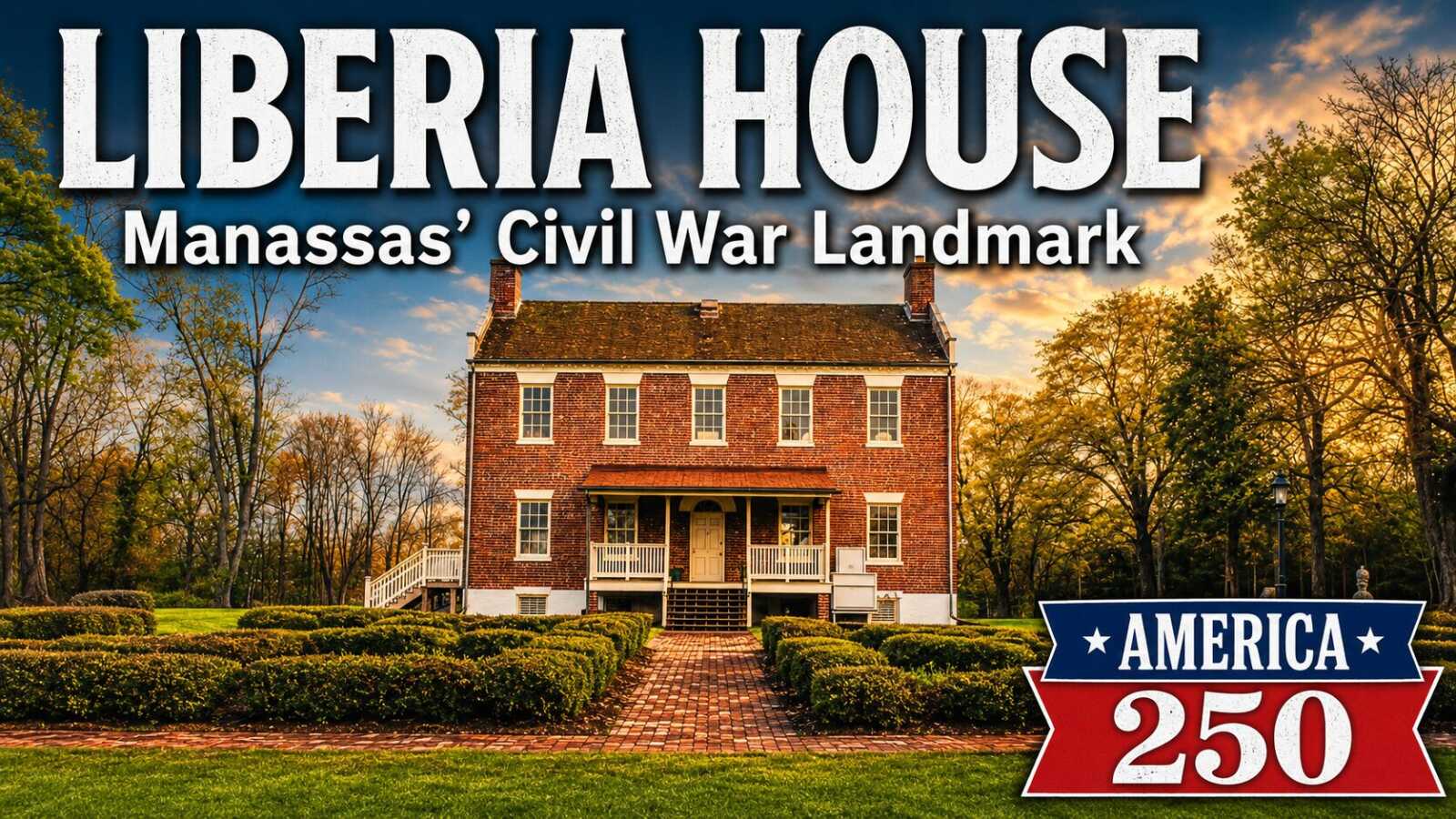
Curator Mary Helen Dellinger shares how an 1825 plantation house and the Naylor family’s resilience illuminate Northern Virginia’s path from the Revolutionary era to today.
In the heart of modern Manassas, a red-brick Federal-style house built in 1825 still stands as one of the few early 19th-century structures left in the city. Liberia House, once the center of a vast plantation worked by nearly 90 slaves, bridges the Revolutionary War’s agricultural shifts and the Civil War’s upheaval. As America approaches its 250th anniversary, the site offers a powerful window into what changed—and what endured—in Northern Virignia.
Mary Helen Dellinger, curator of the Museum and Historic Sites for Manassas, has overseen the city’s historic properties since 2012. A Manassas Park native who earlier spent 21 years at the Fredericksburg Area Museum, she calls Liberia her favorite. “It’s our oldest site in terms of years of use,” she said. “The other sites are Civil War sites or late 19th, early 20th century sites. Liberia, because of the stories it tells… you can do all kinds of stuff with.”
The Weir family, descendants of the powerful Carter family, established Liberia on land that once stretched more than 1,600 acres. Harriet Bladen Mitchell Weir and her husband, William James Weir, had the house built in 1825. Unlike earlier tobacco plantations, it focused on staple grains such as corn, wheat, and oats.
Dellinger notes this reflected Revolutionary-era changes: soil depletion from tobacco, the need to feed Washington’s army, and a desire not to benefit England. “Liberia, right out of the gate, was a plantation or a farm… that planted staple grains,” she explained. Slave labor, however, carried over fully. By 1860 the Weirs held almost 90 slaves, making Liberia one of the largest operations in western Prince William County.
During the Civil War, the house served as headquarters for both Confederate Gen. P.G.T. Beauregard and Union Gen. Irvin McDowell. Confederate President Jefferson Davis and U.S. President Abraham Lincoln both visited. In 1862, the Weir family fled to Fluvanna County, leaving enslaved caretaker Nellie Naylor in charge.
“Nelly Naylor chose to stay,” Dellinger said. “She could very easily have left… But she didn’t do that. And she stayed. And Liberia survived the war relatively unscathed.” After the war, the grateful Weirs gave Naylor 12½ acres in what is now Manassas Park. Her descendants still live in the area and hold family reunions at Liberia. “We open the house for them,” Dellinger noted. “Their ancestors were the ones that built the house.”
Today the City of Manassas owns the property. The Breedens donated the house and 5.6 acres on Dec. 31, 1986; the city purchased an additional 12.6 acres as a buffer.
The grounds at 8601 Portner Avenue are open from sunrise to sunset daily at no charge. The house is open every Saturday from Memorial Day to Labor Day, 2–4 p.m., and for special events, private tours, and programs. Markers interpret the lives of the Weirs, the Naylor family, and soldiers from both sides.
The Manassas Museum (9101 Prince William Street), which stewards Liberia and several other historic sites, has marked America 250 with traveling exhibits such as “Unbound: Free Black Virginians” and playful July programming including an unsigned Declaration of Independence for visitors to sign.
Dellinger emphasizes the power of objects and stories that connect past to present. A post-war letter from Melinda Robinson, a formerly enslaved woman seeking information about her siblings, and a Mosby’s Rangers reunion flag both rank among her favorites in the museum collection. “That’s the power of an object,” she said. “Even if the stories are hard… they’re still great stories that talk about our past.”
Liberia House invites visitors to walk the same ground where enslaved people labored, presidents conferred, and a freed woman helped preserve a home for future generations.
Plan a visit to the grounds at 8601 Portner Avenue or check the Manassas Museum schedule at 703-368-1873 for house openings.