

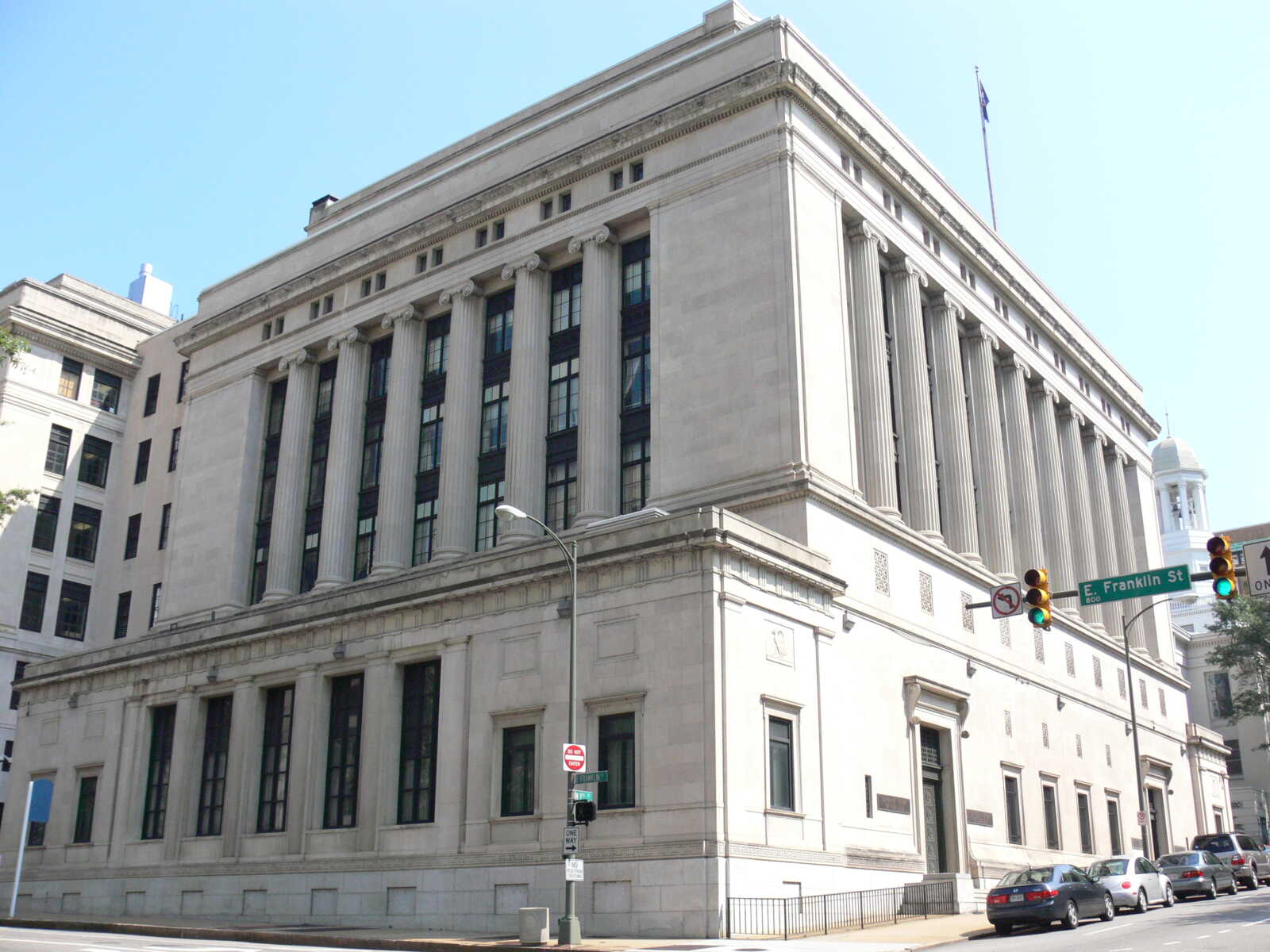
The Virginia Supreme Court on Monday heard oral arguments in a high-profile case questioning the validity of a constitutional amendment on redistricting that voters narrowly approved on April 21, 2026. The case, Don Scott in his official capacity as Speaker of the Virginia House of Delegates et al. v. Ryan T. McDougle, Virginia State Senator and Legislative Commissioner for the Virginia Redistricting Commission et al., centers on whether the General Assembly followed required procedures under Article 12 of the Virginia Constitution.
Attorneys for the appellants, who are defending the amendment, argued that the process complied with every step outlined in the Constitution. Counsel for the appellees, who are challenging it, contended that multiple procedural violations — including the use of a special session and the timing relative to the 2025 general election — rendered the amendment invalid. Chief Justice Cleo E. Powell presided, with all justices present. A ruling is expected in May.
The arguments focused on three main issues: the validity of the General Assembly’s first passage of the amendment during an October 2025 special session originally called for budget purposes; whether the November 4, 2025 general election qualified as the required “intervening” election for House of Delegates members; and compliance with statutory notice requirements under Section 30-13.
Arguments Presented in Court
Matthew Seligman, appearing pro hac vice for the appellants and introduced by Richard Hawkins, told the court that the General Assembly and voters strictly followed Article 12. “Last week, the people of the Commonwealth approved an amendment to the Virginia Constitution. That approval was the final step in a clear and comprehensive process laid out in Article 12,” Seligman said. He argued that challengers had abandoned claims based on the General Assembly’s internal rules and that courts lack the power to enforce such rules.
In the special session, Seligman and Tillman Breckenridge (arguing for the Commonwealth as Solicitor General) relied on constitutional silence regarding its duration and the political accountability provided by elections. Breckenridge noted the legislature conducted business on only 14 days despite the session remaining open, with pro forma recesses, and corrected claims of continuous year-round operation. Justices, including Justice Stephen R. McCullough and Justice Wesley G. Russell Jr., pressed both sides on whether a special session automatically terminates upon the convening of a regular session, with questions highlighting the 1971 constitutional debates and the intent to maintain a citizen legislature.
The core dispute over the intervening election turned on the meaning of the word “election.” Appellants maintained it refers to a single day — the first Tuesday after the first Monday in November — consistent with multiple provisions in the Constitution and federal law. Seligman cited Article II, Section 6 and Article VII, Section 4, and noted that early voting constitutes participation prior to the election. “Every single voter in the Commonwealth has the option to cast their ballot on Election Day,” he said. Breckenridge reinforced this with textualism and quotes from the 1971 debates.
Thomas McCarthy, arguing for the appellees, countered that “election” encompasses the entire process, including campaigning and Virginia’s 45-day early-voting period. He emphasized the purpose of the intervening election requirement: allowing voters to weigh in and hold legislators accountable. McCarthy highlighted the uncontested facts regarding plaintiff Camilla Simon, a Democrat who voted early for Delegate Rodney Willett before learning Willett had introduced the amendment. “She was very unhappy about this. She wished she could redo her vote, but she couldn’t,” McCarthy said. The trial court accepted these facts from a verified complaint.
McCarthy also argued the special session exceeded its scope, which was limited to budget bills and specific items under H.J.R. 6001, and that it terminated with the regular session. On Section 30-13, he stressed strict compliance was required under precedent such as *Coleman*, noting the required postings 90 days before the 2025 election never occurred.
Justices questioned both sides on hypotheticals, including the passage of an amendment on election day itself, and the practical effects of early voting. Justice Russell’s first question confirmed that the yes vote outcome was legally irrelevant to the procedural issues.
Post-Argument Analysis from Ken Cuccinelli
In a virtual press conference following the arguments, former Attorney General Ken Cuccinelli described the hearing as focused on the “2025 questions” regarding first passage and the intervening election. He noted that only three justices — particularly McCullough and Russell, who have extensive experience with the Virginia Constitution — asked questions, while the court moved with notable speed. Cuccinelli called the pace “the fastest I’ve ever seen” for such a case and predicted a ruling by mid-May, likely invalidating the referendum on the 2025 procedural issues due to lack of strict adherence to Article 12 requirements.
How the Case Reached the Supreme Court: Timeline
– October 2025 (late October/Halloween): General Assembly passes the proposed amendment for the first time during a special session called for budget reconciliation.
– **September 19 – November 4, 2025**: Early voting and general election for House of Delegates and governor; more than one million ballots cast before the amendment was proposed.
– January 14, 2026: General Assembly passes the amendment for the second time.
– March 6, 2026: Early voting begins for the April 21 referendum (less than 90 days after second passage).
– April 21, 2026: Voters approve the amendment by a narrow margin of approximately three points.
– Parallel litigation includes a Tazewell Circuit Court injunction (Judge Jack Hurley Jr.) blocking certification on additional grounds, and a recent Richmond Circuit Court ruling on the proposed maps.
The Supreme Court previously allowed the referendum to proceed while litigation continued. A decision in this matter could moot related challenges, including those involving ballot language and the new maps, which would shift Virginia from the current bipartisan commission-drawn districts to new lines drawn by the General Assembly.
The case carries significant implications for Northern Virginia voters and representation in upcoming elections. Both sides await the court’s ruling on these foundational constitutional questions.
