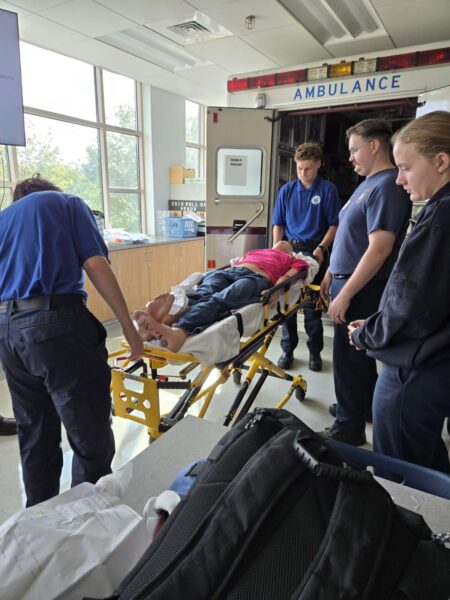

Colonial Forge High School’s Emergency Medical Technician (EMT) program is more than just a class—it’s a commitment to saving lives, a fast track to high-demand careers, and a transformation of ordinary students into certified first responders before they don graduation robes. Stafford County Public Schools offers an Emergency Medical Technician (EMT) program as part of their Career and Technical Education (CTE) offerings.
Four high school seniors—Parwin Jamal, Katherine Nicole Peterson, Leslie Benyarko, and Kaiya Vazquez—are at the finish line of one of Stafford County Public Schools’ most intensive career and technical education programs: the Emergency Medical Technician (EMT) track. Each student has completed multiple levels of EMT coursework, earned certification as a Nationally Registered EMT (NREMT), and gained real-world experience through ride-alongs and emergency call response.
Led by Lisa Davis, a seasoned firefighter, paramedic, and educator, the EMT program mirrors college-level and professional EMS academy training. Students who complete the two-year track are eligible to test for both their Virginia EMT license and national certification, allowing them to enter the workforce directly or pursue advanced education in medicine or public safety.
“This is not a class to learn about EMTs,” Davis explained. “This is a class to become one.”
Davis keeps in touch with many of the program’s alumni, hearing stories of how they use their skills in their daily lives. Davis said one former student was on a group hiking trip and used the skills in the program to create splints and a litter to carry an injured friend to safety. Others have assisted victims of car crashes or unconscious strangers.
From their first day, students treat the classroom like a real EMS station. They arrive early, check their gear, and train with their shift crews. Daily instruction includes anatomy, trauma care, CPR, airway management, radio communication, and simulated emergency scenarios. Clinical rotations—where students ride with 911 crews—provide hands-on experience with real patients and emergency calls.
Over three course levels—EMT I, II, and III—students earn professional certifications including Hazardous Materials Awareness, Traffic Incident Management, and Stress First Aid. Many take on capstone projects or serve as student instructors by senior year. While the curriculum is designed to produce field-ready EMTs, it offers much more: confidence, communication skills, emotional resilience, and time management. Students say it pushes them far beyond a typical classroom experience.
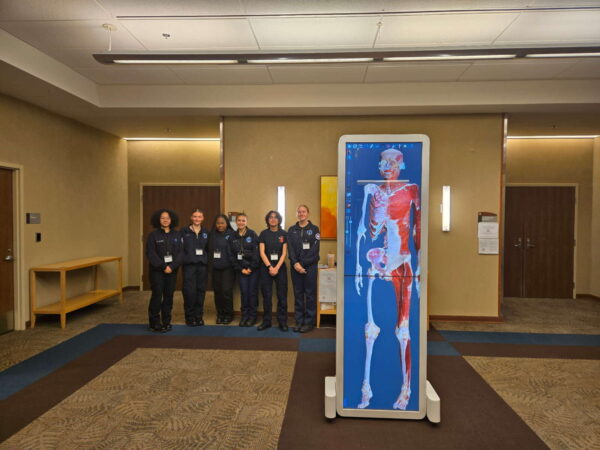
Though their reasons for enrolling vary, each of the four students shared a similar motivation: a desire to do something meaningful with their education.
“Two years ago, I would see EMT students in their uniforms taking care of simulated emergencies,” said Jamal. “There’s also an ambulance in the classroom, and I knew I wanted to be a part of that!”
Vazquez, who joined the program from overseas, was drawn by the opportunity to enter the medical field early. “Hearing I could become a certified EMT made me excited,” she said.
Benyarko learned about the program from a senior in her science class. “I was amazed—I couldn’t believe high school students could graduate as healthcare providers,” she said. Peterson agreed, describing it as a great gateway into any medical profession.
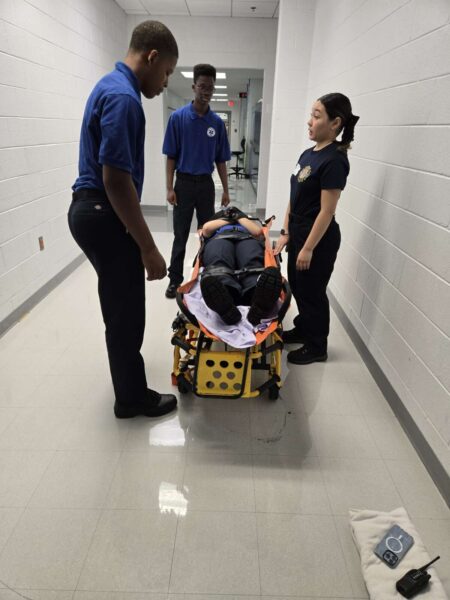
The students also emphasized that the course requires real commitment. “I didn’t take the warnings seriously at first,” said Peterson. “But this class is different—you have to dedicate time outside of school and be accountable for your progress.”
Ride-alongs were a highlight for all four students. Jamal said the experience gave her a true understanding of how stations and emergency calls operate. Peterson added that even small moments—like grocery runs with the crew—made her feel like part of something real.
Now in EMT III, some students have taken on teaching roles. Vazquez recently led a senior capstone on psychiatric emergencies. “It showed me I love educating others,” she said.
Beyond technical skills, the program shapes character. “It taught me how to stay calm and focused when things get tough,” said Jamal. “I can look at the big picture and find a solution.” Benyarko noted, “It taught me that failure is part of the journey. What matters is that you get up and keep going.”
Even for those not pursuing emergency medicine, the program’s impact is lasting. “It’s prepared me for college and a future in forensic science,” said Vazquez. “I’ve learned medical knowledge, communication, problem-solving—you name it.”
All four students say they’re walking away from high school with not only a diploma but a career-starting credential.
“This program is a head start for any future medical education,” said Peterson. “The clinicals are huge. Interacting with EMS crews builds experience and opens doors.”
When asked what they would tell a student considering the EMT track, all four gave the same advice: Be ready to commit—but do it.
“This class takes a lot of time and effort,” Peterson said. “But if you’re willing to put that in, it’s 100% worth it.” Benyarko added, “Every challenge is a chance to grow.”
Jamal summed it up: “Take it. It helps you grow into a better person and sets you apart in a really meaningful way for the future.”
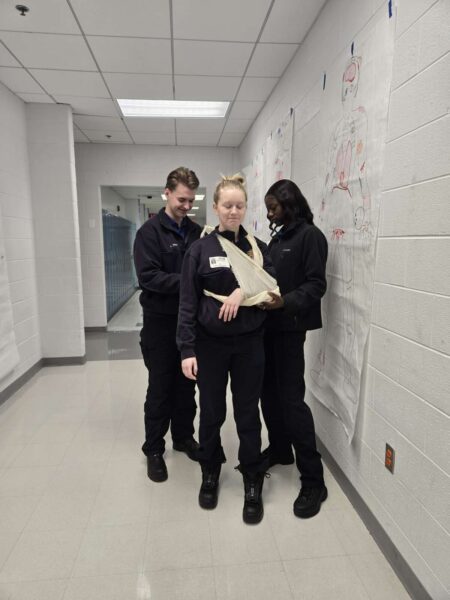
Davis said the program’s alumni have pursued a wide range of careers after high school. Some work in volunteer and career departments in Stafford, Prince William, the City of Manassas, the City of Fredericksburg, Fairfax, Spotsylvania, King George, Prince George (VA), King William, the Department of Defense and in other states. A few alumni moved west and work Ski Patrol in Colorado and Utah. Other students now work as EMTs in hospitals, or as nurses in local hospitals and across the country. Davis said several students are currently in Paramedic school, nursing school, or medical school, while many other alumni serve in various branches of the military serving as Corpsman and Medics. Many of our alumni regularly come back and assist with the current classes.
“I’m extremely proud of the students in this program that worked hard to get here and worked hard every day that they were here, Davis shared. “Seeing that fire ignite and that passion drive them is amazing. And at the end of the first year when they test and receive that certification, it is awesome to see them celebrate that accomplishment and have that pride in themselves for the hard work and dedication it took them to this achievement.”
Stafford County Public Schools offers a diverse array of Career and Technical Education (CTE) programs designed to equip high school students with practical skills, industry-recognized certifications, and pathways to both higher education and immediate employment. These programs encompass various fields, including vocational trades, health sciences, information technology, and education. These programs are designed to provide students with practical experience, industry certifications, and a competitive edge in both higher education and the workforce.