

Wednesday, June 22, marked the 50th anniversary of the devastation caused by Hurricane Agnes.
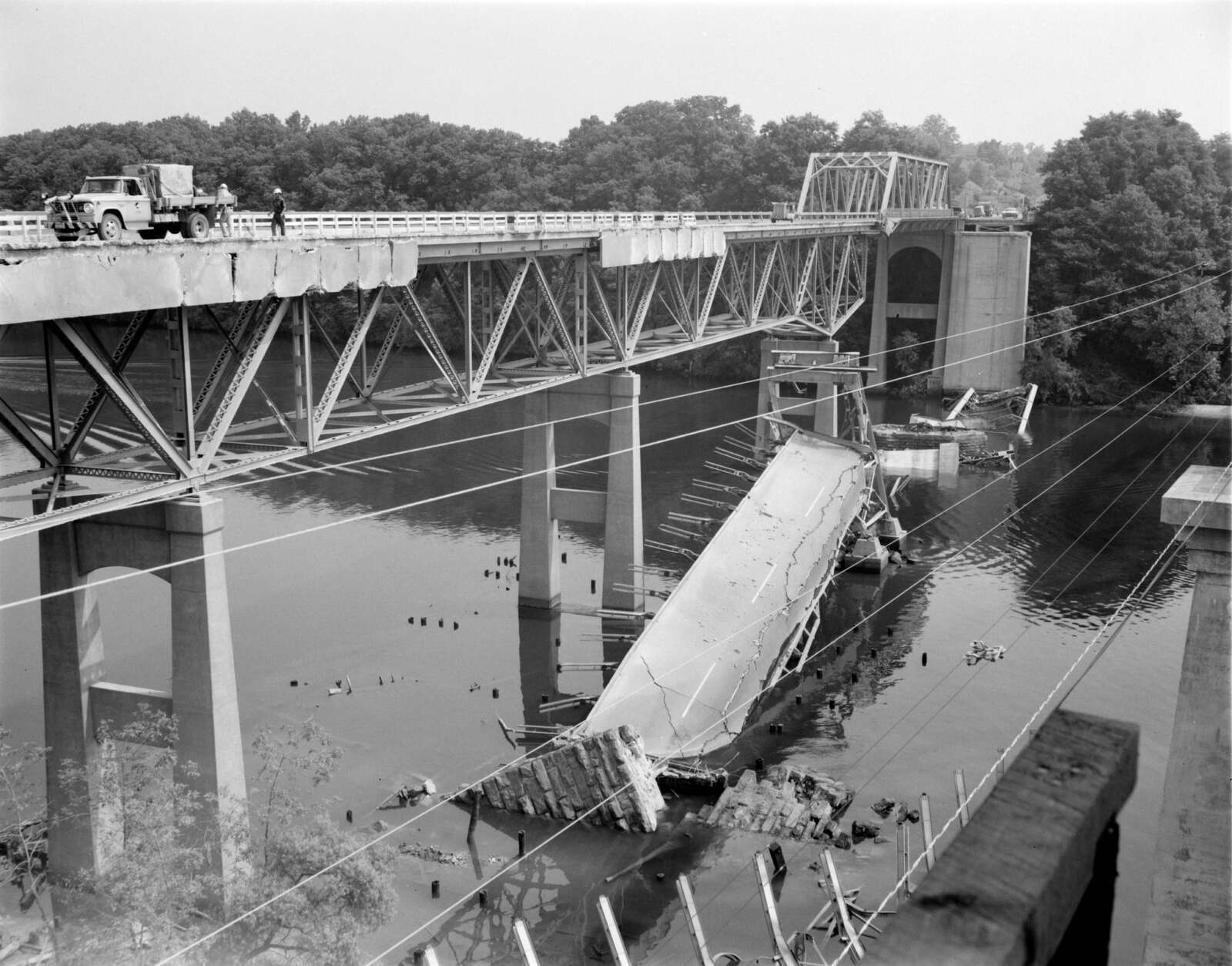
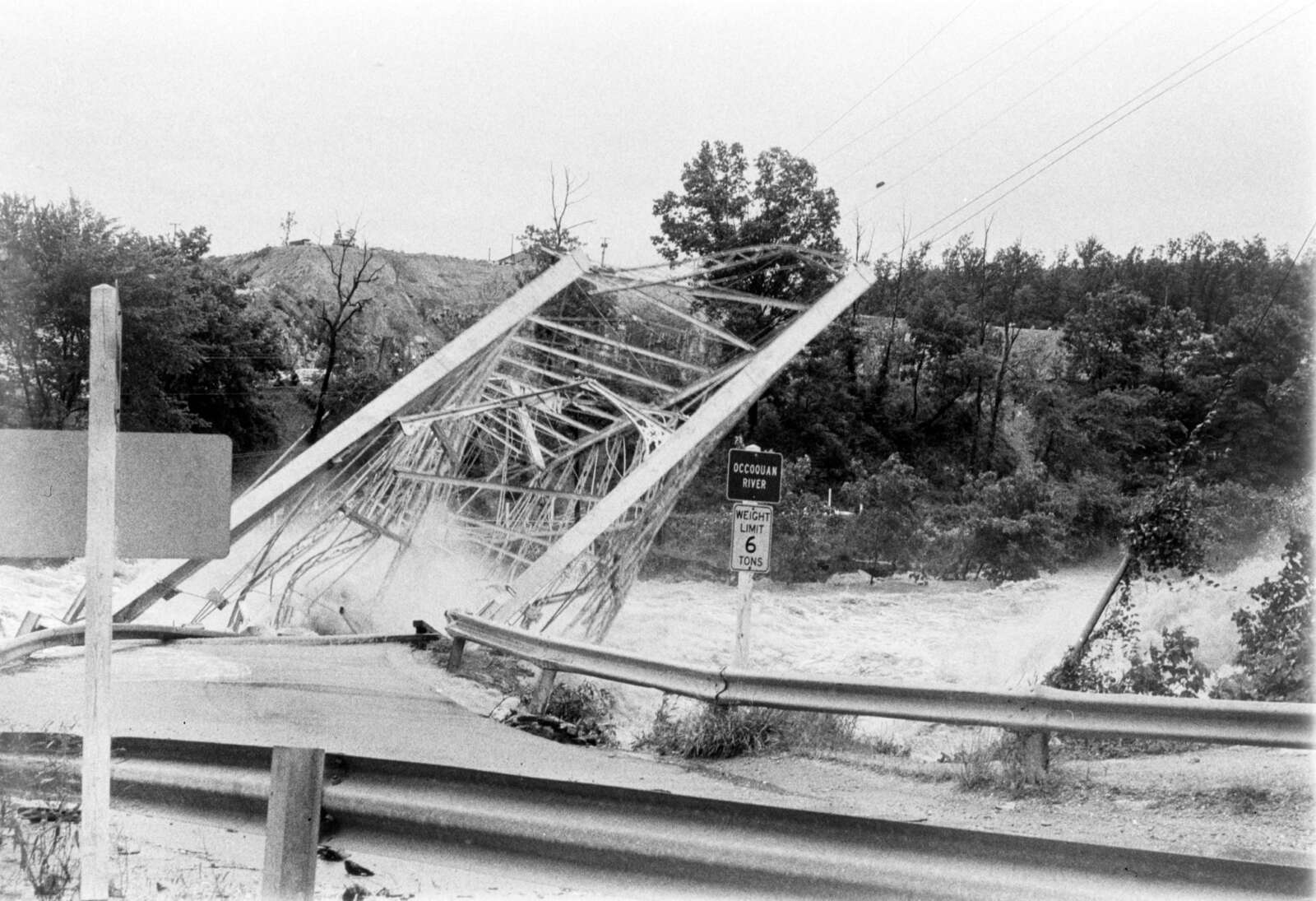
The storm caused massive damage across the region, including washing out a bridge that carried Route 1 over the Occoquan River in Woodbridge and the iron Pratt truss bridge that carried Route 123 over the Occoquan River. The Town of Occoquan is planning an extended commemoration of Agnes during our Discover Occoquan week in August. Among the week’s planned activities is the dedication of a memorial that incorporates part of the truss bridge destroyed by the floodwaters.
From Occoquan Mayor Earnie Porta:
Agnes started out as a tropical depression over Mexico’s Yucatan Peninsula on June 14, 1972, became a tropical storm on June 16 as it slowly curved northward, and became a hurricane on June 18 while in the southeastern Gulf of Mexico. Making landfall near Cape San Blas, Florida, on June 19, by the next day it had already weakened to a tropical depression after crossing the Florida/Alabama/Georgia line, with the National Hurricane Center issuing its final bulletin on Agnes at noon on June 20.
Just as rapidly as Agnes had declined from its modest hurricane status, however, the emergence of a large extratropical trough resulted in her upgrade again to a tropical storm. By June 22 she had entered the Atlantic Ocean and re-intensified. It was on that day that the storm waters of Agnes flooded the Town of Occoquan and other parts of Prince William County.
The violent impact of the storm caught most by surprise. As the floodwaters surged, authorities evacuated the Town of Occoquan. At the town’s western end the one-lane iron Pratt truss bridge, which had stood for 94 years and carried Route 123 across the Occoquan River, was itself carried away by the floodwaters of Agnes. Homes and businesses were wiped out, never to return.
While the damage to Occoquan was a seminal event in the town’s 20th-century history, Agnes also dramatically affected other parts of Prince William County. Flooding along scenic Bull Run in the western end of the county resulted in drownings and 1,300 people fleeing their homes. Rising waters also displaced people and businesses in Dumfries, Triangle, Quantico, and elsewhere. Initial estimates at the time identified three dead from the flooding and more than $18 million in damages, with the U.S. Department of Agriculture reportedly estimating that the county’s farmers suffered some $300,000 in losses.
While the arrival of Agnes was a story of devastation, it was also a story of bravery and charity. Largely caught by surprise there was little central coordination of a response; first responders, emergency personnel, and average citizens improvised to rescue and aid others in the community. After floodwaters receded volunteers emerged to help the Town of Occoquan and other damaged communities recuperate.
Though modest in wind speeds, in terms of the damage it caused Agnes was one of the most devastating storms in history up to that time. States to the north of Virginia also sustained heavy losses until Agnes eventually traveled northeast of Cape Breton Island and out into the North Atlantic.
