

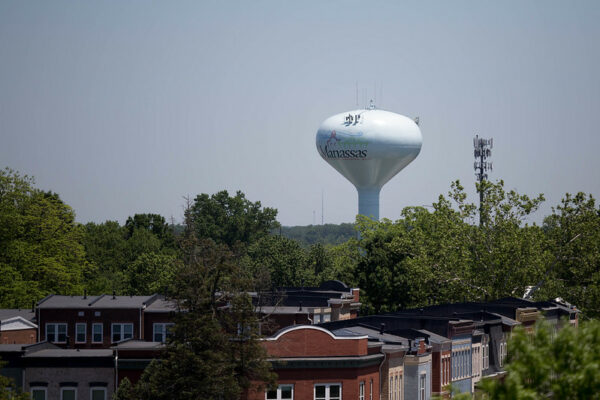
At about 10 square miles, Manassas isn’t a large city. And when it comes to the available on which to build, there’s not much left.
At Monday night’s City Council meeting, this fact was highlighted as city leaders reviewed the Manassas Comprehensive Plan, a document that will outline and guide development in the city of the next 20 years.
While much of the attention has been placed on the city’s downtown area, formerly known as Old Town before a 2015 rebranding effort by the city government, one resident says a piece of land between the city’s famed railroad tracks and Liberia Avenue, an industrial corridor, is ripe for development.
“It’s strategically located, and we think that development should be a vibrant mixed-use area to compete with town centers we will see in [neighboring] Manassas Park, and near George Mason [University Science and Technology Campus],” said Mike Vanderpool, of the law firm Vanderpool, Frostick, and Nishanian, P.C.
For years, Vanderpool and his Manassas-based firm have provided legal advice to city leaders. He says as the city runs out of developable land, “…the best place for us to be able to go is up.”
Going up could mean increasing the allowable height of which a building may be built. Many who spoke to the Council on Monday don’t want to see that happen in the downtown, instead of hoping to keep the neighborhood’s red brick, small-town charm.
The point to the Messenger Place apartment building that opened last year. At five stories, with 94 apartments, it’s the tallest building in downtown. “Taller buildings like Messenger Place should be somewhere else,” said Judith Molinelli, who asked city leaders to include a cap on building heights in its new 20-year plan.
The comprehensive plan proposes allowing buildings just as tall, but to build them with a “step back” configuration so the portion of the building that abuts the street is three stories, and then it gradually gets taller as the building rises.
This building style makes it feel as if the buildings aren’t towering over you as you walk down the sidewalk, say city officials.
Parking in downtown is also a concern. Increasing the density in downtown will mean developing all open lots, and a planned parking garage on the north side of the railroad tracks.
Parking lots in downtown will become rarer than they are today. And that may be by design, as the city’s plan also calls for more local bus service, bicycle, and pedestrian pathways, and a heavier reliance on the city’s downtown train station served by Amtrak and Virginia Railway Express for regional commuters.
If all goes to plan, Manassas will become a city of fewer vehicle drivers and more transit users.
City officials spent two years formulating the comprehensive plan, a document the city is required to have, and to update every three years, according to state law.
More than 1,300 residents participated in a series of town hall meetings called “Let’s Talk Manassas” to share their vision of how the city should look by 2040.
Many of the residents’ comments and suggestions were incorporated into the plan, said Manassas Planning Commission Chairman Harry Clark.
The City Council is expected to adopt the plan during its February 10 meeting.
