

Town Council
|

Dumfries Town Council returns Sept. 15 to a $319,000 question: whether to study a possible change to the town’s boundaries before it has named a parcel, drawn a proposed line or opened talks with Prince William County.
The study area is county land in ZIP 22026 that already sits outside town limits. Staff has not picked properties. Council has not authorized talks with the county or the Commission on Local Government. Town Manager Tangela Innis said the contract is decision-support so officials can learn whether a line change is even worth pursuing. It would not annex anyone.
|
Dumfries Town Council on Sept. 1 laid out a September calendar of volunteer home repairs, a slave cemetery stone dedication, a community-versus-police basketball night, and a late-month economic-mobility kickoff.
Councilman Russell A. Young announced Labor of Love Weekend, a town community-service initiative that helps eligible homeowners complete minor repairs and improvements at no labor cost.
|
This one’s for the people who really care about local news.
Locals Only members get deeper reporting, more context, and fewer shortcuts.
Think that’s you?
👉 Join Locals Only
Already a member? Sign in
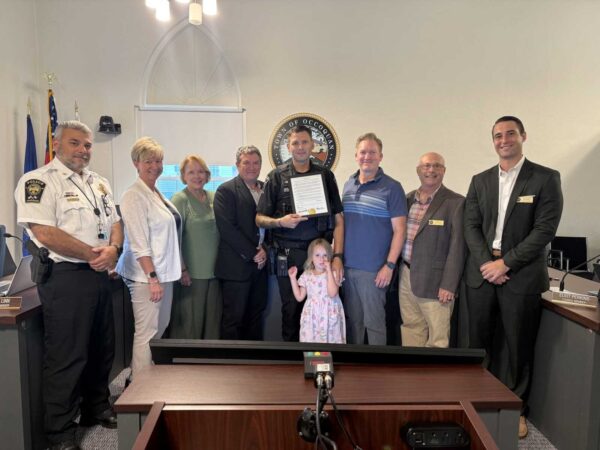
Town Council honored Officer Justin Hendrickson on Tuesday for stopping at a catastrophic Interstate 95 crash while off duty, helping pull people from a burning vehicle, and giving first aid until fire-rescue crews arrived.
The May 29, 2026, southbound crash in Stafford occurred about 2:30 a.m. and killed five people and injured more than 30. Hendrickson, hired by the Occoquan Police Department in September 2022, was heading home after a shift when he came upon the scene.

This one’s for the people who really care about local news.
Locals Only members get deeper reporting, more context, and fewer shortcuts.
Think that’s you?
👉 Join Locals Only
Already a member? Sign in

The Dumfries Town Council recognized public safety efforts during its June 2, 2026, meeting by proclaiming June as National Safety Month, highlighting the Dumfries Police Department’s strong performance and the shared responsibility of keeping the community safe.
Chief Vernon Galyen accepted the proclamation on behalf of the department. He emphasized that safety is a collaborative effort. “It’s everybody’s involved in that, not just the police department, but the community, business owners, and community leaders,” Galyen said. He noted the department’s role as first responders serving residents and businesses in the town.
“I believe instead of banning electronic dirt bikes, the town should create clear rules and enforce them,” Camden Pittman told the Haymarket Town Council, Prince William Times reported. “We have seen, in our neighborhood, adults who are swerving at children, adults who are cursing them out,” Candace Morriss said, Prince William Times reported.
The proposed ordinance would ban e-bikes on sidewalks, set a 20 mph speed limit, prohibit riders under 14 without adult supervision, require helmets for young riders, ban earphones in both ears, and impose a $5,000 license fee on commercial rentals. The Haymarket Town Council held its first public hearing June 1 before a standing-room-only crowd and plans a second hearing June 23, a work session June 29, and a vote in July.
This one’s for the people who really care about local news.
Locals Only members get deeper reporting, more context, and fewer shortcuts.
Think that’s you?
👉 Join Locals Only
Already a member? Sign in
|