

Stafford County supervisors on Sept. 1 directed staff toward letters asking Gov. Abigail Spanberger for a special legislative session on data-center rules — and, if comprehensive legislation cannot pass quickly, a temporary pause on new large-scale approvals — then expanded the ask to the federal administration.
The board did not vote that night to approve or deny any campus. Supervisors said their own ordinance — which Chairman Deuntay T. Diggs, George Washington District, called the strictest in Virginia and Supervisor Crystal L. Vanuch, Rock Hill District, said includes among the largest setbacks in the country — still cannot stop river withdrawals, well impacts, or high-load power costs that land on ratepayers.
Public comment treated Accokeek Center, which the Planning Commission had recommended 4-3 after lengthy opposition, as the live example. Speakers also flagged Forest Lane, described as four buildings on the Rappahannock River, for the Sept. 3 agenda.
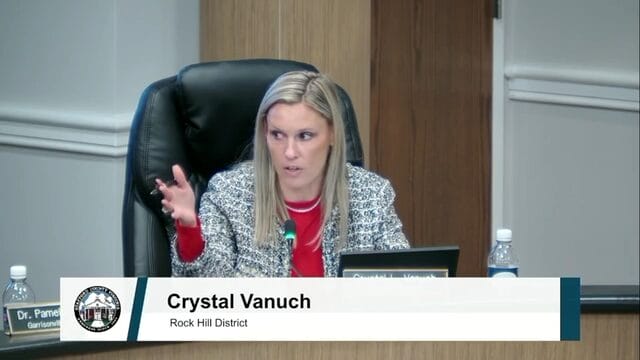
Vanuch said bipartisan concern is growing in Richmond. She named Sens. Sturtevant, Perry, and Louise Lucas and former Sen. Richard Stuart. Attributing Sturtevant, she said data centers could double Virginia’s electric demand in 10 years. Other states, she said, put high-load infrastructure costs on the users, while Virginia has not. Stafford cannot stop a campus from pulling Rappahannock water, she said.
“I don’t want us to be in a situation where we approve now and regulate later,” Vanuch said. “That is irresponsible public policy.”
She asked the board to seek a special session on siting, local authority, setbacks, groundwater, watersheds, energy infrastructure, and ratepayer protection, and a temporary moratorium if comprehensive rules cannot be enacted promptly. She stressed she was not arguing that all data centers are bad — only that growth must be responsible under Dillon Rule limits.
Supervisor Tinesha Allen, Griffis-Widewater District, said a governor letter alone was not enough. If the county asks the state to slow down, she said, it should also tell the federal government it does not want siting forced on localities.
“If we’re gonna send a letter to the governor, then I would want — I’m only gonna support if we also send a letter to the administration telling them that we’re not in support of forcing the same growth,” Allen said.
Supervisors Maya P. Guy, Aquia District (participating remotely), Darrell E. English, Hartwood District, Diggs, and Dr. Pamela Yeung, Garrisonville District, joined the dual-letter direction. Diggs said Stafford already has the strictest local ordinances the county can write. Yeung said she supported letters to the governor, the federal government, and former Gov. Glenn Youngkin, whom she named as having pushed data-center growth in Virginia.
Vanuch said the Richmond letter and the Washington letter should make different arguments. Local authority, groundwater, and DEQ load studies belong in the state ask, she said. The federal letter, she said, should focus on keeping placement decisions with localities rather than federalizing siting. Diggs, later in the legislative-program discussion, said he does not see the state giving localities control of a 13-state grid.
Yeung said staff is already drafting a local evaluation framework covering height, distance from homes, generators, environmental impact, rivers and streams, and water and electric capacity. She previously sat on the Water Basin Commission that sought a JLOC study on Rappahannock use and said counties have to work together because water flows downstream.
The same night, the board’s legislative-program discussion pointed toward written asks for stronger local controls, no withdrawal from Aquia Creek or the Rappahannock, well-mitigation grants, and high-load users paying their own infrastructure. No finished letter text was adopted on the floor.
Residents pack the microphone
Jeff Eastland of the Rock Hill District said the Planning Commission last Wednesday recommended Accokeek Center despite what he counted as 98 percent opposition and more than 100 emails against with none for. He said the commission ignored the comprehensive plan, regulations from last October, and resource protection areas. The same applicant attorney, he said, had called water, power, noise, and air “non issues.”
“It’s really hard to make someone understand something when their salary is entirely dependent on them not understanding it,” Eastland said.
Julia Lewis of the Falmouth District said the Planning Commission vote was 4-3 after almost four hours of opposition. She said $9.4 million in cash proffers would be due only when the second building gets a certificate of occupancy — two to three years out — and could be spent however the board chooses. Lewis said land-use attorney Charlie Payne said there is already an end user, and she said there is a “good possibility” it is Amazon because of “Amazon approved Purple Pipe.” She said staff has already briefed the board on the “devastating cost” of an Amazon tax deal through 2051, and that reduced buffers will be used against the county on future applications. She also said Del. Stacey A. Carroll, D-64th, had urged the board at a prior work session to raise local taxes and bring businesses such as data centers.
Kieran Allen said tax revenue is not enough reason without a written plan for how the money will be used and whether it will fix harm.
Nancy Rueter said the application changed mixed-use land to industrial and raised silt risk toward Crow’s Nest and Accokeek Creek. She said she watched an Embrey Mill pond fill with hundreds of cubic yards of silt.
Kristen Maxson of the Falmouth District told supervisors a Forest Lane data center proposing four buildings on the Rappahannock was listed for the Sept. 3 agenda. “Public be there,” she said. She also criticized a last-minute Planning Commission item on high-voltage lines at Crane’s Corner and Porter Lane.
What happens next
As of the Sept. 1 meeting, letters to the governor and the federal administration still had to be drafted. Accokeek Center had not received a Board of Supervisors up-or-down vote that night. Forest Lane was identified on the dais only as a Sept. 3 agenda item; this draft does not report a hearing outcome.
