

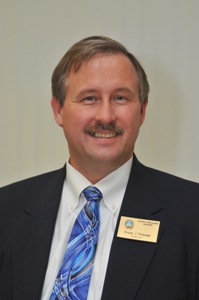
Prince William County, Va. – Residents learned more about how some of their tax dollars are used and then urged a Woodbridge leader to bring change to the system.
Prince William County Supervisors all use what are known as Discretionary Funds — monies left over after the bills of running the supervisors’ offices have been paid. The funds have been a topic of discussion in past weeks after Prince William Brenstville District Supervisor Wally Covington retracted a $100,000 donation that would have to a charity in which his wife works as a volunteer.
On Thursday, the Prince William County Committee of 100 hosted a meeting in Manassas to discuss the usage and workings of these funds.
The public meeting had a panel of four speakers: Prince William Woodbridge District Supervisor Frank Principi, Certified Public Accountant and recent candidate for Prince William At-large Supervisor John Gray, Paul Moessner, who sits on the ACTS Board of Directors, and Michael Thompson, President of the Thomas Jefferson Institute for Public Policy.
Discretionary Funds are often doled out, at the elected leaders’ discretion, to local projects or organizations in the county.
Principi said some of his funds were extremely helpful in providing support to the 300 victims of Tropical Storm Lee, whom last fall had their Woodbridge homes flooded. The supervisor added that only three percent of his annual budget is used for Discretionary Funds.
Thompson spoke out against using these types of funds, and is avidly opposed to the way they are handled and their implications on the image of the county. Thompson cited that many counties around the country have done away with their process of using discretionary funds and that, “discretionary funds are not common in Virginia.”
While Principi firmly supports the continued system of discretionary fund use in the county, he said changes should be made.
“We should adopt a set of guidelines that the Board of County Supervisors use for funds,” said Principi. The elected leader added there should be, “a cap or sealing on the amount of reallocation of funds that carry over [in the fiscal year].”
Principi added the discretionary funds in his budget were used to, “offset the cost of housing, food and healthcare [for residents].”
The yearly budget for each county supervisor is $335,000, and 70 percent of this annual budget is spent on salaries and benefits for staff members. Another 27 percent of this budget goes to basic operating costs.
Principi gave a detailed summary of his criteria for making donations from his discretionary fund account, while there is no set guideline for doing so, saying that he does not donate to any organizations with any religious affiliation, nor does he donate to start-up organizations, or private organizations.
Moessner expressed his belief that discretionary funds are a positive force in the county he himself has petitioned Board of County Supervisors for money from these discretionary funds to fund projects and initiatives for ACTS programs.
Gray, a member of the Prince William County Budget Committee since 1993, supports many of the donations that the Board of County Supervisors makes with these discretionary funds, but said the use of Discretionary Funds is not transparent to citizens, and that in some cases, due to the lack regulation for these funds.
During the question and answer period, many citizens expressed their concerns with the use of discretionary funds and the potential appearance of impropriety of the county Supervisors, calling for action from Principi and the Supervisors to amend the system for discretionary funds. While no official conclusion was established, citizens in Prince William County had the opportunity to learn more about the discretionary funds and make their feelings known to the Board.
