

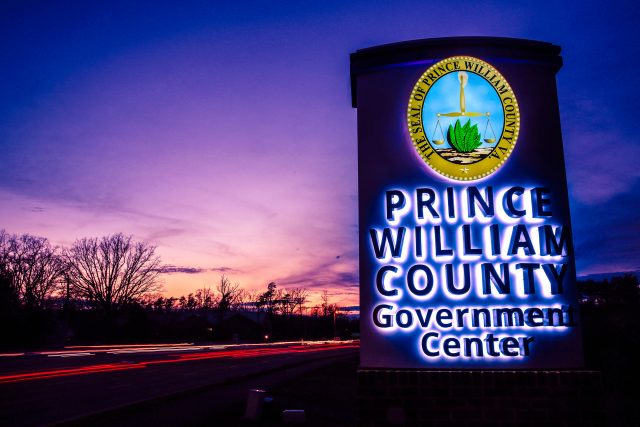
Following hours of public debate, the Prince William County Board of Supervisors voted on July 7, 2026, to deny a Comprehensive Plan Amendment that would have paved the way for the Dulles South Innovation Center (also referred to as Dulles Cloud South or Dulles Innovation South), a data center campus proposed for the Gainesville District.
The decision comes days after the death of the Prince William Digital Gateway project, halting another industrial push in western Prince William County amid concerns over infrastructure, character, and quality of life.
County staff had recommended against advancing the amendment, citing issues with infrastructure capacity, environmental impacts, traffic, and compatibility with the area’s agricultural and hamlet designations. The proposal sought to re-designate approximately 1,940 acres across 252 parcels from Agriculture/Forest and Hamlet to Industrial (I-3) and Mixed Use. A concurrent rezoning to Planned Business District was also requested.
At full build-out, the project was estimated to deliver up to 43 million square feet of industrial space — twice the floor area of the Digital Gateway — and generate approximately 43,570 daily vehicle trips, an increase from the existing 2,535 trips in the area. Sanders Lane, a local roadway, currently sees about 1,600 average daily trips.
Public Input Highlights Divisions
Dozens of residents spoke during the hearing, reflecting divides in the community.
Opponents raised alarms about impacts. Bethann Kim of Gainesville noted the development would come within two lots of her home, citing noise from generators and other disruptions. “The people who oppose … are the ones who are going to stay here,” she said. Neil Kelly thanked supervisors for stopping the prior Digital Gateway and urged adherence to staff recommendations on infrastructure, pollution, traffic, noise, and rising utility bills.
Supporters pushed for study, emphasizing potential economic benefits. Beth Waller, a Sanders Lane resident since 1997, highlighted existing traffic backups at the one-lane bridge and power infrastructure strains, asking the board to allow the proposal to proceed through the process for revenue and green space opportunities. Jennifer Newfield, a Gainesville/Catharpin landowner with family roots, pointed to Catharpin’s population share (about 0.21%) and projected $38 billion in revenue over 20 years. “Please be willing to get the picture rather than just shoot down what this county needs,” she said. Darrell Blackwell, a retired law enforcement veteran and Catharpin resident, spoke to the need for public safety funding.
Other supporters, including retired military personnel and business owners, called for analysis, coordination with Loudoun County, and placement of industrial uses while addressing road widening and power lines.
Board Emphasizes Planning Discipline and Community Vision
Supervisor George Stewart (Gainesville District), whose district includes the affected area, framed speakers as neighbors and moved to deny the deferral and proceed to a vote. He underscored the Comprehensive Plan’s protections for rural character, Occoquan headwaters, and visual resources, describing the proposed scale as incompatible.
Supervisor Tom Gordy (Brentsville District) stressed the importance of planning and following the county’s strategic documents rather than out-of-cycle amendments. Supervisor Victor S. Angry (Neabsco District) advocated for a pause following the Digital Gateway experience to let the community shape a vision.
Chair Deshundra L. Jefferson and other supervisors emphasized process, fairness, and minimizing litigation risks. Supervisor Yesli Vega (Coles District) noted the value of bipartisanship and cross-aisle dialogue.
Residents on both sides described changes along Sanders Lane, Pageland Lane, and Catharpin Road — including truck and commuter traffic, bridge backups, accidents, and advancing power transmission lines — underscoring the area’s shift from roads.
Dulles South vs. the Prince William Digital Gateway: A Size and Context Comparison
The Dulles South proposal drew comparisons to the Prince William Digital Gateway, a project that was declared dead in early July 2026 after years of legal battles.
- Scale: Dulles South targeted ~1,940 acres with up to 43 million square feet of data center/industrial space. The Digital Gateway spanned ~2,100 acres with ~22 million square feet — making Dulles South double the build-out intensity on a footprint.
- Location and Impact: Both projects focused on rural western Prince William (Gainesville area for Dulles South; near Manassas National Battlefield Park for Digital Gateway), raising concerns over traffic, power demands, environment, and compatibility with homes and historic resources.
- Outcome: While Digital Gateway advanced to county approval in 2023 before being voided by courts, Dulles South was halted at the Comprehensive Plan stage.
Brief History of the Prince William Digital Gateway
Proposed primarily by QTS Realty Trust (Blackstone) and Compass Datacenters, the Digital Gateway was billed as potentially the world’s largest data center campus. It faced opposition over its scale, proximity to the Manassas battlefield, and impacts on the rural crescent.
Lawsuits challenged the rezonings on improper public notice grounds. Prince William Circuit Court Judge Kimberly A. Irving voided the approvals in August 2025; the Virginia Court of Appeals upheld this on March 31, 2026. The county board and Compass declined further appeals in April 2026. QTS withdrew its petition to the Virginia Supreme Court around July 2, 2026, ending the project.
