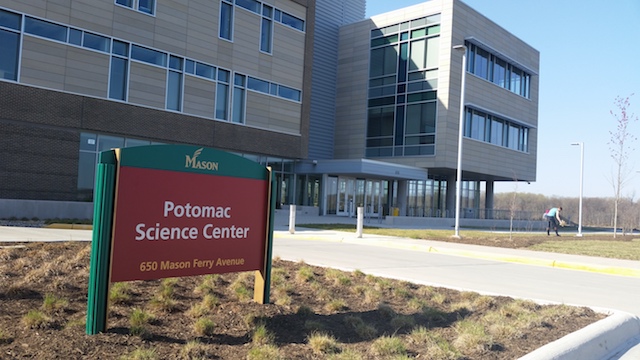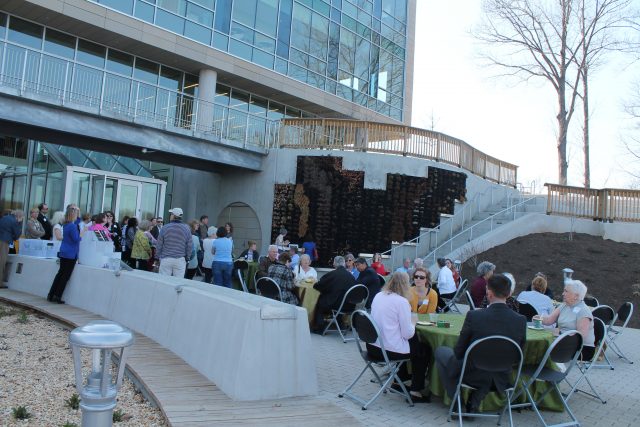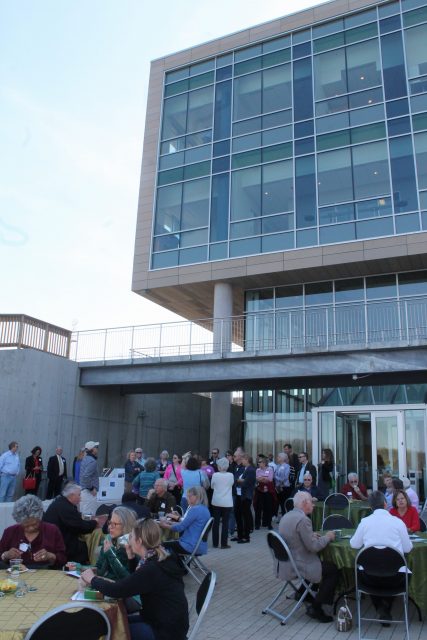
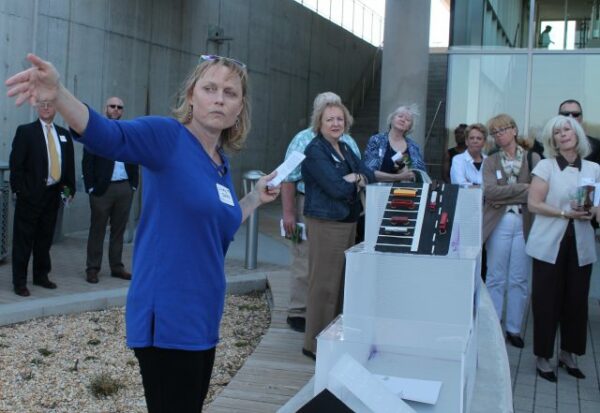
WOODBRIDGE — The Potomac Science Center held its grand opening on Thursday.
Hundreds gathered inside the 50,000 square foot facility on the banks of the Occoquan River in Woodbridge.
“We’re taking over the Potomac,” said George Mason University President Angel Cabrera.
The center will serve as a research hub for the university where scientists will study water quality, as well as the effects of climate change, and how development in the region impacts the waterways.
“We need to learn how to grow with nature and learn to live how we want to live without damaging the environment,” added Cabrera.
The center features eight research labs to include wet chemistry labs, aquatic ecology, and geospatial computer labs. Other exhibits at the center will show the impact of development on the river and will use aerial imagery to show how the footprint of the Occoquan and Potomac Rivers have changed in the last 80 years.
There will also be research on the effects of prescription medication flushed into the sewage systems, as well as the effects on washing clothes, like fleece jackets, and the fibers that runoff into waterways.
When it rains, much of the rainwater to fall the center will flow through a filtration system that includes multiple rock gardens built into the center itself. By the time water flows into the Occoquan, it will be nearly potable.
A portion of the Potomac Heritage National Scenic Trail runs across the building’s grounds and above a patio next to the river. It’s located next to the Occoquan National Wildlife Refuge, and across from Mason Neck State Park and the adjacent Mason Neck Wildlife Refuge.
Cabrera hopes the new center will become a leader in the research fields of tidal rivers, similar to the Massachusetts-based Woods Hole Oceanographic Institute which led the team that discovered the Titanic.
The center has plans for a future dock that would allow small boats to access the center, allowing professors and students to launch river expeditions from the science facility. There is a large build up of silt along the river shore where the science center sits so any dock would need to be built several hundred feet into the water to reach the channel on the Occoquan.