
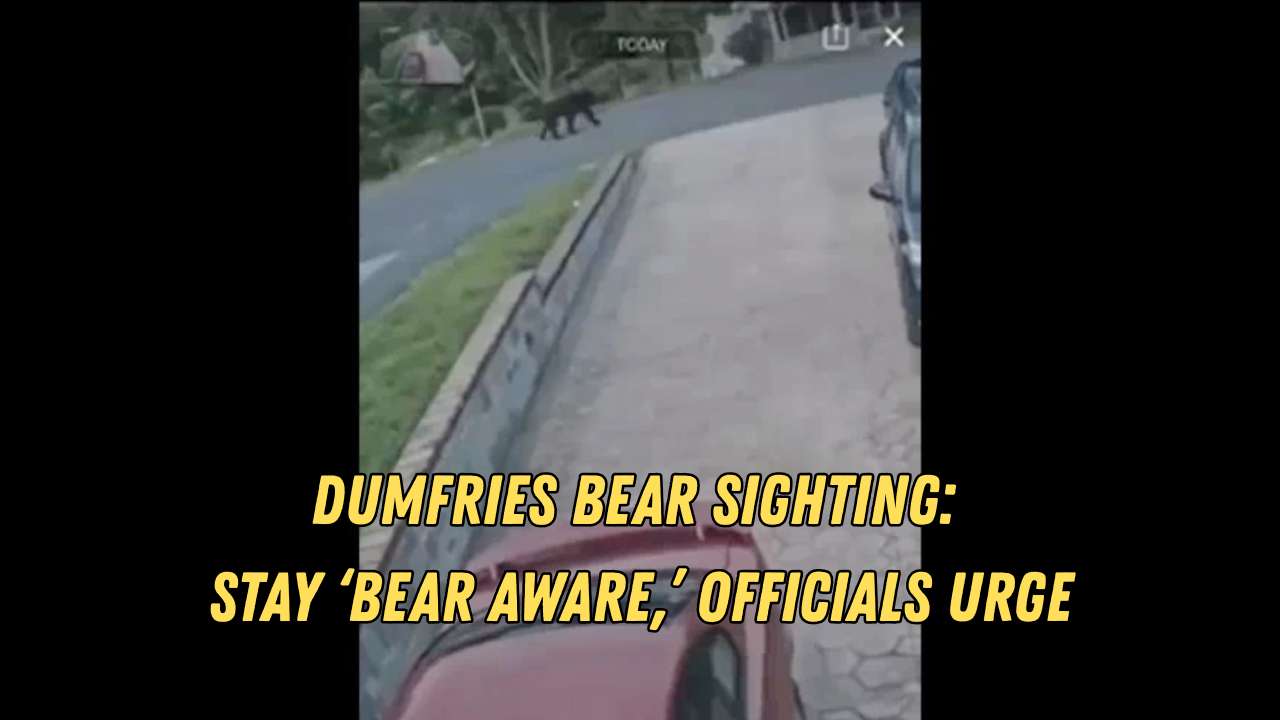
DUMFRIES, Va. – A recent black bear sighting in a residential area near Duke Street has drawn attention to the close relationship between suburban neighborhoods and the expansive wilderness of Prince William Forest Park.
Kristi Shelton, a biologist at the park, says bear sightings like this one aren’t unusual—and are often misunderstood.
“This is the kind of place where you’d expect to see bears,” said Shelton. “But when they venture into neighborhoods outside the park, that’s when it becomes a news story.”
Located just south of Dumfries and adjacent to Marine Corps Base Quantico, Prince William Forest Park spans nearly 15,000 acres, making it the largest protected natural area in the Washington, D.C., metro region. It’s also the only national park in the country designated as a “National Forest Park,” a name that reflects its unique roots as a New Deal-era Recreational Demonstration Area.
Shelton says the only type of bear found in this part of Virginia is the black bear. Despite their sometimes intimidating size—adult males can weigh up to 600 pounds—black bears are generally timid and avoid human contact.
“They’re nothing like the grizzlies or brown bears you hear about out west,” said Shelton. “They’re usually gone before you even know they were near.”
The bears’ primary draw to the park this time of year is the abundance of wild blueberries, which grow across the forest floor. But when natural food sources become scarce—or when young bears leave their mothers in search of new territory—they may roam into developed areas.
Shelton says nearby communities like Brittany and Montclair frequently report bears on porch cameras, usually passing through in search of an easy meal like a bird feeder or trash can.
“A lot of people forget just how close we are to this massive park,” said Shelton. “If food is accessible, they’ll take advantage of it.”
The key to protecting both bears and people, Shelton says, is making sure bears remain afraid of humans. That means removing attractants and making noise to scare them away when they appear.
“If there’s a bear in your yard, bang pots and pans or slam a door—make it uncomfortable for them,” she said. “We want them to associate humans with danger, not dinner.”
For those hiking or camping inside the park, Shelton recommends staying “bear aware”: keep food stored securely, make noise while walking trails, and avoid surprising a bear. In the rare event you encounter one, don’t run. Instead, back away slowly while keeping the animal in view.
Over the weekend, Shelton says a visitor hiking in from Route 234 did just that. She saw a bear on the trail, backed away as instructed, and the bear left the area without incident.
Prince William Forest Park doesn’t have a large enough bear population to require bear boxes at campgrounds like Shenandoah National Park does. Still, the park has installed bear-proof trash cans in its cabin areas after isolated incidents of trash being disturbed.
“No one wants a bad encounter,” Shelton said. “And the good news is—most people never have one.”
The National Park Service encourages locals to visit nps.gov/prwi for information on how to stay safe and enjoy the park responsibly. Shelton says the park also uses social media to educate the public about what to do if they encounter a bear.
“Being aware is the best protection we have,” she said.