
 Editor’s Note:
This article is part of our ongoing America 250 series, marking the 250th anniversary of the United States. Our America 250 reporter, Deen Lateef, will take us to several historical sites across Fredericksburg, Manassas, and Woodbridge and introduce us to treasured places that reflect our community’s history.
From musket locks stamped 1776 to a building where the community still gathers, one local museum brings the spirit of independence to life in ways textbooks never could.
As our nation gears up for the 250th anniversary of America’s Declaration of Independence, visitors to the Fredericksburg Area Museum are discovering that the fight for freedom wasn’t just fought on distant battlefields — it was armed and supplied right here along the Rappahannock River.
The Virginia history I was raised on remembered Fredericksburg first for its Civil War battles. Yet inside the historic 1816 Town Hall and Market House, Ms. Kylie Thomson, the museum’s Curator of Collections, shared a much earlier story: Fredericksburg’s critical industrial and patriotic role during the Revolutionary era.
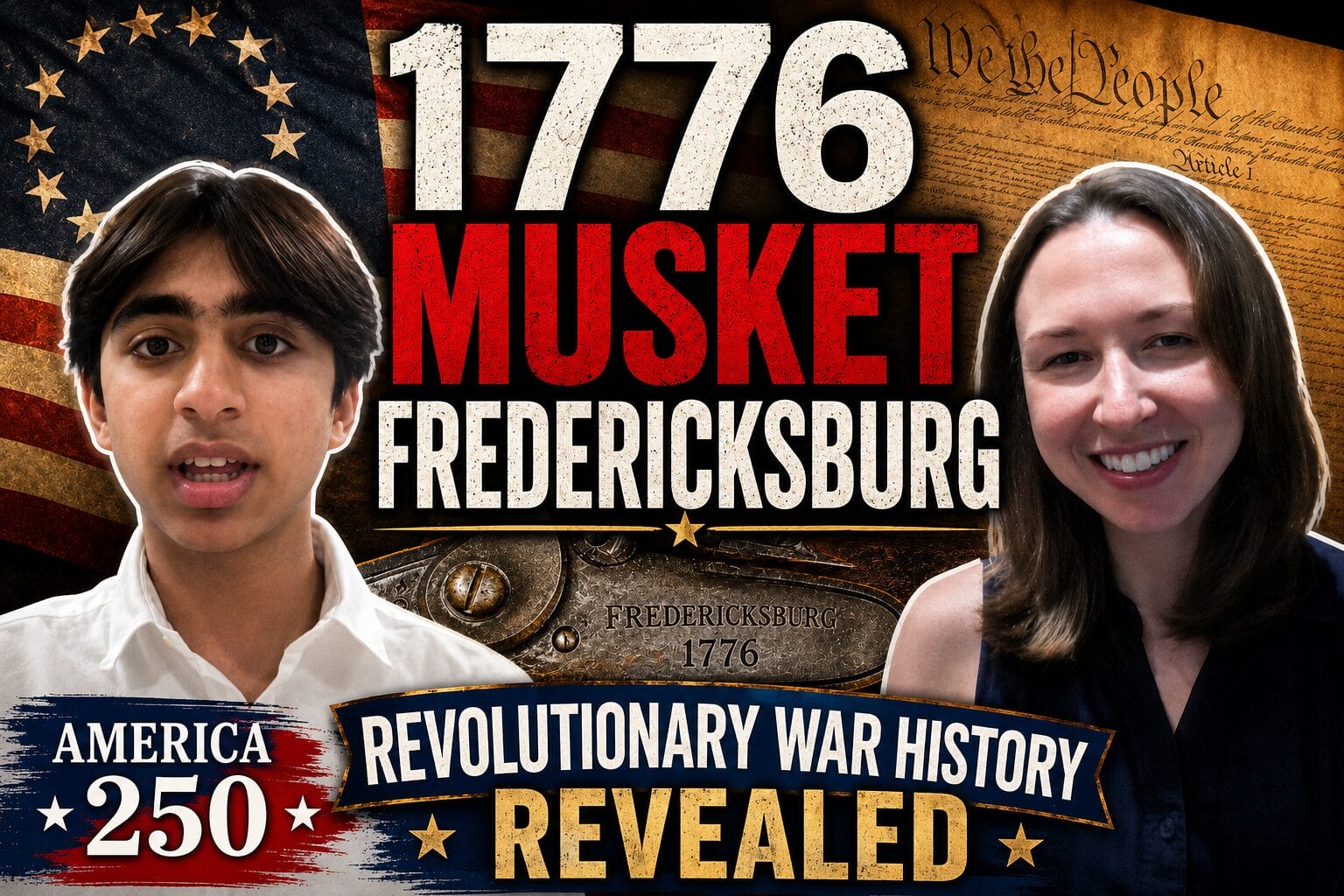
Two forges — the Fredericksburg Gunnery and Rappahannock Forge, aka Hunter’s Iron Works in Stafford County — produced muskets, repaired captured British weapons, and manufactured ammunition and equipment for the Continental Army. One artifact stands out.
“It says Fredericksburg 1776 on that metal lock,” Ms. Thomson shared during a recent interview. “These artifacts, there are not many in existence. To have a Fredericksburg-made musket back here in Fredericksburg is something so incredible.”
The lock, displayed near a letter from a local general pleading for supplies to protect the forges, tells a layered story. Enslaved workers and free black residents contributed significantly to the war effort, even as they navigated their own quests for liberty. Some free Black sailors from a commissioned patrol ship later became successful merchants in the area.
The museum’s collections span over 10,000 years of regional history, but the Revolutionary period anchors much of its narrative. Before the Revolution, indigenous paths and the river’s navigation limit at the fall line helped turn Fredericksburg into a bustling merchant and industrial town. When British taxes threatened that commerce, local merchants and residents passionately backed the Patriot cause.
“A lot of people think of Fredericksburg as a Civil War town… but it’s also a colonial town,” the Thomson noted. “The revolution parts happened here in major [ways]. We had a lot of major generals come from this area.”
Names like George Washington (who grew up nearby at Ferry Farm), his brother-in-law Fielding Lewis (who helped finance the gunnery), General George Weedon, and others highlight the concentration of leadership from the region.
The building itself adds another fascinating layer. Constructed in 1816 with locally quarried Aquia Creek sandstone — the same material used in the White House foundation — the structure originally featured an open-air market on the first floor. Meat hooks and arched stalls remain visible. It served as City Hall until the early 1980s and continues to host civic events, such as council swearing-in ceremonies, on its historic desks.
Preservation efforts balance the building’s age with active use. “For being 209 years old, it’s holding up pretty well,” staff explained, noting ongoing reinforcements to the soft sandstone.
The museum is leaning into America 250 with the ongoing exhibit “Witness to a Revolution: 250 Years of History,” which runs through December 2027. It connects the Revolutionary era to later commemorations, including the bicentennial and Civil War period. Programming includes walking tours on Revolutionary women, artifact talks, and interactive experiences like a recreated tavern where visitors can play period games.
One powerful story featured is that of an enslaved woman named Haggie, who escaped during the height of the Revolution and evaded recapture, finding protection in a Charlottesville community.
“Every single item, no matter how small or mundane seeming, has a story to it,” the staff member said. “It’s attached to people and places that if you look hard enough… unlocks these crazy stories.”
As America approaches its semiquincentennial, the Fredericksburg Area Museum reminds locals and visitors alike that history isn’t distant — it’s down the street, in the walls of a former market house, and in the courage of everyday people who helped forge a nation.
The Fredericksburg Area Museum is open daily 10 a.m. to 5 p.m. (closed Wednesdays) with free admission. Find upcoming America 250 programs at famva.org.