

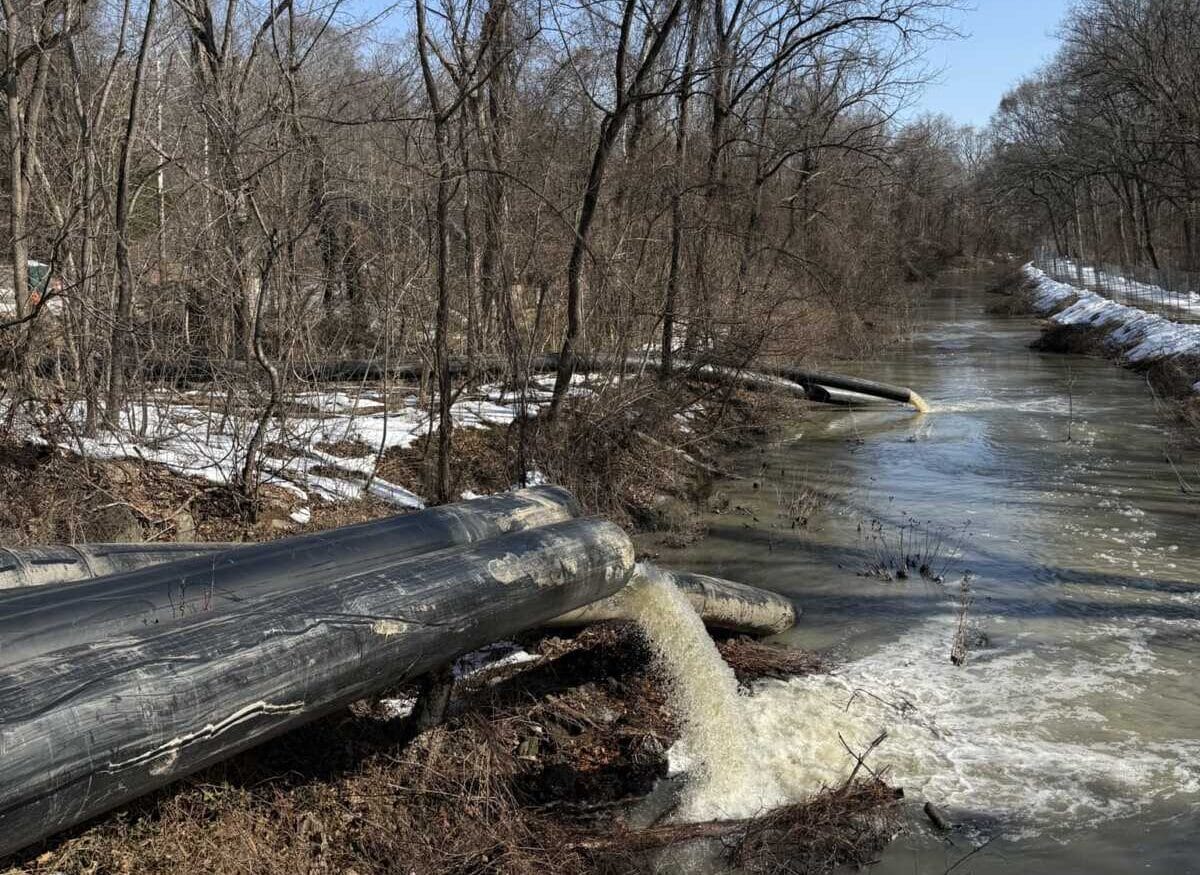
Drinking water in Prince William County, Manassas, Stafford County, and surrounding communities remains safe despite a massive sewage spill into the Potomac River that has triggered health advisories and a federal response.
Key Takeaways
Date: Spill began January 19, 2026; Virginia advisory issued February 13, 2026; federal response announced February 16, 2026
Location: Potomac River from American Legion Bridge to Harry Nice Bridge, affecting shoreline areas in Prince William County and Stafford County
- A 72-inch sewer line operated by DC Water collapsed in Maryland, releasing an estimated 243–300 million gallons of untreated wastewater into the Potomac River.
- Prince William Water customers are not affected because Fairfax Water’s intake is upstream of the spill.
- The Virginia Department of Health issued a recreational advisory warning against swimming and full-body contact downstream.
- President Donald Trump announced federal coordination efforts, including FEMA involvement.
Full Coverage
Municipal drinking water systems serving Prince William County, Manassas, Manassas Park, Stafford County and Fredericksburg remain unaffected by the sewage spill, according to local and state officials.
Fairfax Water, the wholesale provider for Prince William Water, draws water from the Potomac River several miles upstream of where the contamination entered near Cabin John, Maryland.
Prince William Water spokesperson Kathy Bentz said the spill occurred downstream of Fairfax Water’s intake and has not affected drinking water quality or service.
The City of Manassas relies on Lake Manassas as its primary water source, while Fredericksburg, Spotsylvania County and Stafford County draw from the Rappahannock River system, which is separate from the Potomac.
DC Water and the Virginia Department of Health have stated that drinking water treatment processes remain fully operational. No boil-water advisories have been issued.
Pipe Collapse Released Millions of Gallons
The incident began January 19, 2026, when a 72-inch section of the Potomac Interceptor sewer line collapsed along Clara Barton Parkway in Montgomery County, Maryland, near the Chesapeake & Ohio Canal.
The 1960s-era pipe, operated by DC Water, carries wastewater from parts of Northern Virginia — including Fairfax County, Loudoun County and the Dulles area — as well as Montgomery County to the Blue Plains Advanced Wastewater Treatment Plant in Washington.
DC Water estimates between 243 million and 300 million gallons of untreated wastewater entered the Potomac River during peak overflows between January 19 and January 24.
Crews installed bypass pumps to divert flow around the damaged section using an isolated portion of the C&O Canal. DC Water reported that high-capacity pumps installed in mid-February have increased the system’s ability to handle rain and snowmelt.
The utility has stated there are no major ongoing overflows at the site, though permanent repairs could take nine months or longer.
Health Advisory Affects Prince William, Stafford
On February 13, the Virginia Department of Health issued a recreational advisory covering approximately 72.5 miles of the Potomac River from the American Legion Bridge to the Harry Nice Bridge near Colonial Beach.
The advisory includes shoreline areas in Woodbridge, Dumfries and Stafford County.
Health officials warned against swimming, wading, tubing and other full-body contact activities due to elevated bacteria levels, including E. coli. Officials said bacteria can pose risks through ingestion, skin contact or open cuts. Pet owners are also advised to keep animals out of affected waters.
Marinas Report Economic Impact
While drinking water remains safe, local boating businesses say public concern is affecting operations.
Terry Hill, owner of Hampton Landing Marina in Woodbridge and Potomac Marine towing and salvage, said dive crews use dry suits and full-face masks under DC Harbor Police safety requirements when raising winter-sunken boats.
“Gear still gets contaminated,” Hill said, describing cleaning procedures that include bleach and disinfectant sprays. He called public messaging about river conditions “very confusing” and said uncertainty could significantly reduce boating activity.
Carlton Phillips, owner of Prince William Marina on the Occoquan River for more than 45 years, said customer inquiries have been “very, very low.”
Phillips said some boaters have expressed concerns about swimming and wakeboarding, while others have discussed selling their boats. He noted that the Occoquan River’s freshwater flow moves toward the Chesapeake Bay, which he said helps flush contaminants, but described the current situation as one of the most negative events of his career.
Federal Response Announced
On February 16, President Donald Trump announced on Truth Social that he directed federal authorities and the Federal Emergency Management Agency to coordinate response efforts related to the spill.
Trump described the incident as a “massive ecological disaster” and criticized Maryland Gov. Wes Moore and local officials, stating, “It is clear Local Authorities cannot adequately handle this calamity.”
He said FEMA would provide management and coordination support, though state and local agencies continue to lead on-site operations.
Rob Hartwell of Hartwell Capitol Consulting said the incident underscores the need for a national inventory of aging sewer infrastructure to prevent similar failures.
Environmental groups, including the Potomac Riverkeeper Network, continue independent monitoring efforts. Officials say ice melt and heavy rain could affect river conditions in the coming weeks.
DC Water estimates short-term flow restoration could take four to six weeks, with permanent repairs potentially extending nine months or more.
Annual members save nearly 30%. Upgrade today and SAVE, and keep up with the local news and events that matter most to you.
This article was created with AI assistance and reviewed by Potomac Local News editors for accuracy and clarity.
