

Welcome back to a Potomac Local News series, “Meet Prince William.”
We’ve started this series so Prince William County residents can get to know the important people working behind the scenes to make the county run smoothly and efficiently. This is an opportunity to learn from experts on the county. Potomac Local has asked each leader the same questions in bold, and their respective answers will be found below.
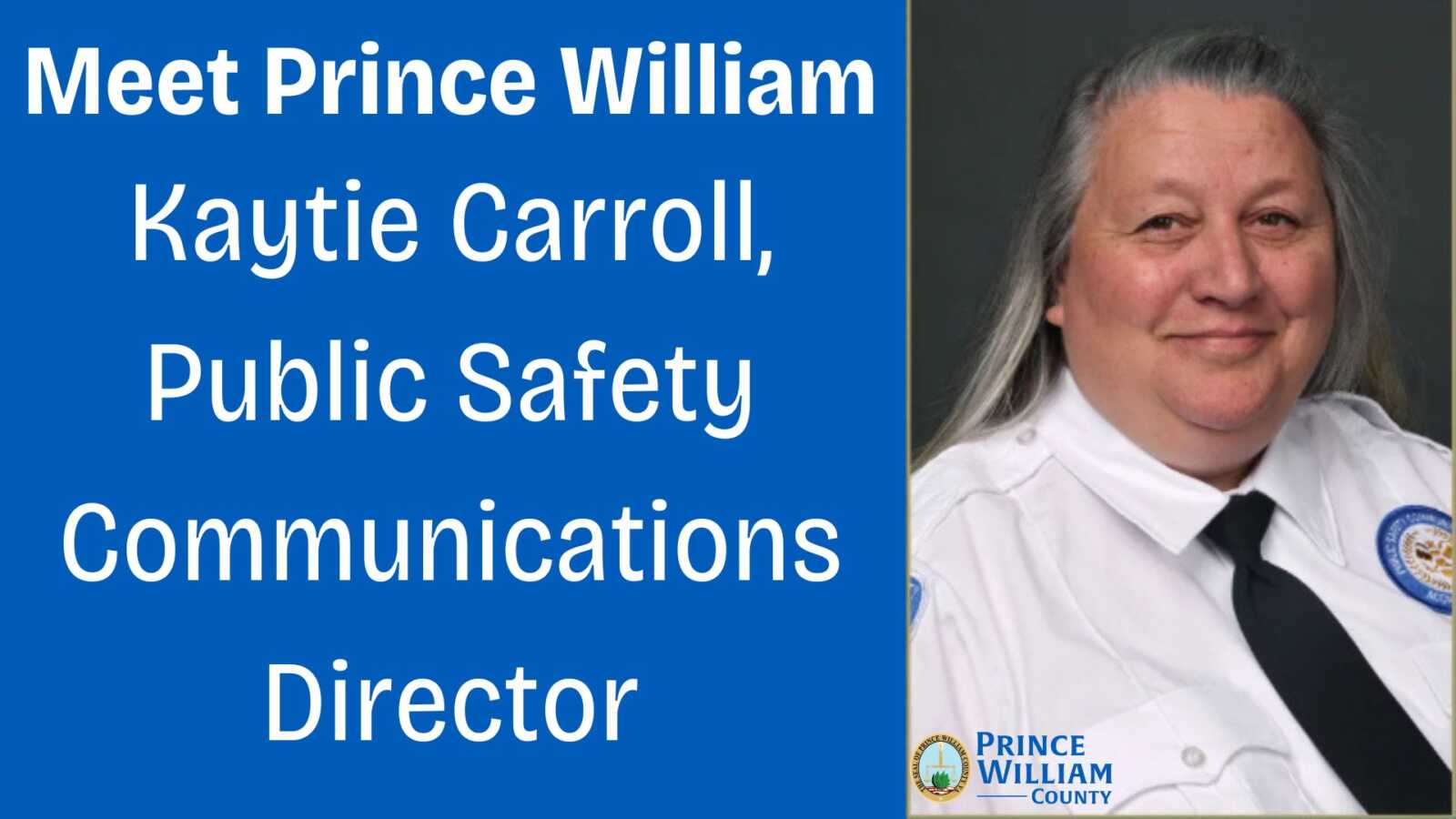
Today, get to know Kaytie Carroll, the Public Safety Communications director. Carroll was appointed in November 2025 as director, though she’s served the department since 1992. She has more than 30 years of experience in 911 operations, emergency coordination and communications technology.
What experiences and roles have most influenced your approach to public safety communications, and how did they prepare you to lead the Department of Public Safety Communications?
As a teenager, I volunteered with the ACTS Helpline, where I first discovered how meaningful it is to support people during some of their most difficult moments. That experience led me to pursue a bachelor’s degree in psychology at George Mason University. After graduating, I joined the Prince William County Department of Public Safety Communications as a telecommunicator, excited to continue serving my community.
Throughout my career, I’ve had the opportunity to grow within the department, learning from a variety of roles and experiences. The work that has shaped me the most has been my involvement with the accreditation team and later serving as the accreditation manager. We were the first communications center in Virginia accredited through the Commission on Accreditation for Law Enforcement Agencies. Being part of accreditation allowed me to truly understand how every piece of the department fits together — from policies and procedures to long-term planning and continuous improvement. This has deeply influenced how I approach leadership and service.
If there’s one thing you wish every Prince William County resident understood about the work of the Department of Public Safety Communications, what would it be?
When a 911 call is received, the telecommunicator’s questioning does not delay the entry of the call or the dispatch of public safety responders. Once essential information is obtained – including incident location, nature of the situation, and whether injuries or weapons are involved – the call taker enters the information into the Computer-Aided Dispatch system.
While this information is being entered, other telecommunicators simultaneously dispatch the appropriate police, fire and emergency medical units to the incident. The telecommunicator continues to gather additional details, which are promptly relayed to responding units as they are enroute. For the safety of all involved, it is critical that callers provide the requested information as accurately and completely as possible.
What are the most significant public safety or emergency response challenges facing Prince William County today, and how is your department adapting to meet those evolving demands?
One of the biggest challenges that we face is the growing complexity of calls. Telecommunicators must navigate high-stress situations, often with limited information, including behavioral health crises and incidents involving multiple responding agencies. This requires them to make careful, quick decisions while remaining calm, compassionate and focused on providing the best possible support to those in need.
Another important challenge is staying ahead of rapidly evolving technology. Today’s systems go beyond voice calls to include texts, photos and videos, as well as real-time transcription and translation services and improved location accuracy. Ensuring that telecommunicators have these necessary tools and resources enables them to connect with the callers more effectively and respond with greater accuracy.
Our department is adapting by investing in advanced technology, ongoing training and strong partnerships with police, fire and medical responders. We continually review and update our policies and procedures to meet national standards and improve how we serve the community.
Can you highlight any key initiatives, technology upgrades or operational improvements the department is currently working on or planning to implement?
We are currently in a multi-year project to upgrade our Call Handling Equipment. This will ensure more accurate and reliable communication and will improve how calls are received, processed and dispatched.
How does community feedback – or collaboration with first responders, county agencies and residents – shape the way your department operates and evolves?
We value feedback from our community and work closely with first responders, county agencies and residents to improve how we serve everyone. In July 2025, we launched a resident feedback system. This platform sends quick, text-based surveys to residents following certain 911 or non-emergency calls for service.
This tool gives residents an opportunity to share feedback about their experience after calling the department, helping us to identify positive interactions and opportunities for continuous improvement. We routinely meet, collaborate and train with our public safety partners and other county agencies. This ongoing collaboration helps us keep improving so we can provide the best possible service to our community.
Looking ahead, what are your biggest goals or priorities for the Department of Public Safety Communications, and what does success look like under your leadership?
My top priorities for the department are to continue to make sure every call for help is answered quickly and with care, using the best technology available, and supporting our dedicated team. Success means the community continues to be confident that when they call 911, they will get fast, accurate and compassionate assistance. It also means our telecommunicators have the tools, training, and support they need to do their important work.
