

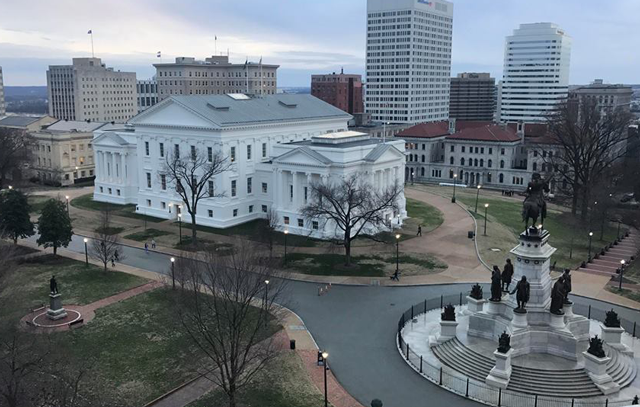
In a rare move, following Donald Trump’s re-election to the presidency, the Virginia House of Delegates Privileges and Elections Committee has scheduled a surprise meeting to review three proposed amendments to the Virginia Constitution.
The meeting, set for 11 a.m. tomorrow, November 13, 2024, will take place in House Committee Room C—206. It will catch the public’s attention ahead of the General Assembly’s regular session in January 2025.
The proposed amendments aim to codify rights around convicted felons voting, abortion, and gay marriage. Notable committee members include bipartisan voices such as Paul Milde (R-Stafford), Joshua Cole (D-Fredericksburg), Rozia Henson (D-Woodbridge), and Michelle Maldonado (D-Manassas).
Proposed Amendments on the Agenda:
Voting Rights
One proposed amendment, co-patroned by Prince William and Stafford County Senator Jeremy McPike (D), seeks to expand and clarify voting rights in Virginia. Under this amendment, individuals who have completed incarceration for felony convictions would automatically regain their voting rights, eliminating the current requirement for rights restoration by the governor.
Additionally, this proposal clarifies that mental incompetency can only disqualify an individual from voting if a court has determined the person cannot understand the act of voting. The amendment also includes provisions to allow advanced registration for young citizens nearing voting age, helping to ease their entry into the electoral process.
Abortion
In response to ongoing debates around abortion, the second proposed amendment would establish a constitutional right to abortion. This amendment, also co-patroned by McPike, states that individuals have an intrinsic right to make decisions about all matters related to pregnancy without government interference unless justified by a compelling state interest, such as protecting health per accepted medical standards.
The amendment also protects individuals from prosecution or penalties for seeking an abortion.
Gay Marriage
If adopted, the third amendment, co-patroned by Cole, would enshrine gay marriage in Virginia’s Constitution. It removes the current language defining marriage exclusively as a union between a man and a woman, instead recognizing marriage as a fundamental right.
The amendment prohibits discrimination in marriage licensing based on sex, gender, or race, ensuring equal treatment under state law for all marriages. Religious organizations and clergy would still retain the right to refuse to perform marriages that conflict with their beliefs. This amendment seeks to solidify Virginia’s commitment to marriage equality, further supporting recent shifts in national and state attitudes.
As the General Assembly prepares to meet in full session in January, the Privileges and Elections Committee’s preliminary discussions on these amendments could set the tone for Virginia’s legislative agenda in 2025.
Citizens interested in speaking or submitting comments to tomorrow’s committee meeting may do so online here.
