

According to city manager Patrick Pate, some businesses in Manassas are charging customers for plastic bags when they shouldn’t.
Pate addressed the issue at a City Council meeting on Monday, January 11. “You should not be charged that tax in the city of Manassas,” explained Pate. “I think there was some confusion among businesses and individuals.”
Although a new state law effective January 1 allows jurisdictions to implement a bag tax, the City Council has not passed an ordinance allowing businesses to charge the tax.
Pate urged any businesses in the city that needed clarification about the law to contact his office at city hall. He added that implementing a bag tax in the city will be discussed later.
Convenience stores, grocers, and pharmacies may charge the tax; essentially, a bag fee passed to its customers.
Fredericksburg implemented a 5-cent-per-bag tax for plastic bags on January 1. The tax is collected at the point of sale, similarly to sales tax, and is administered and enforced by the Virginia Tax Commissioner in Richmond.
Larger “big box” retailers such as Walmart or Target are subject to the tax if the store sells groceries.
Prince William County leaders debated a bag tax in 2021. However, they took no action to levy the new tax. Also, Manassas Park has no bag tax.
There is confusion in Stafford County, too. Commissioner of the Revenue Scott Mayausky asked residents charged a bag tax to contact his office.
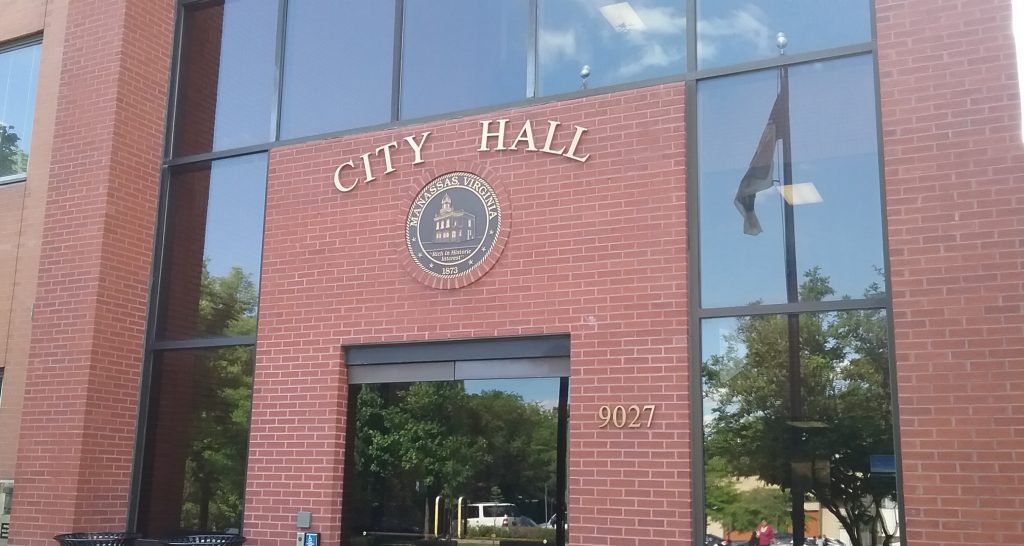
Meanwhile, in Manassas, city employees are getting to move out of city hall and into new and temporary offices next week. The city’s Commissioner of the Revenue and Treasurer will move to the city’s new customer service center, inside the old DMV office at 9800 Godwin Drive.
Later in the month, a handful of other city offices, like economic development and the communications office, will move to the Peabody Building at 9400 West Street.
In April, Manassas City Hall will undergo its first-ever renovation. The building has housed many of the operations of the city since it opened in 1987.
The renovation will address issues plaguing the building’s current workforce, such as traffic flow problems, creating more usable spaces, creating additional meeting and conference spaces, and making use of the hallways to reconfigure office space.
