
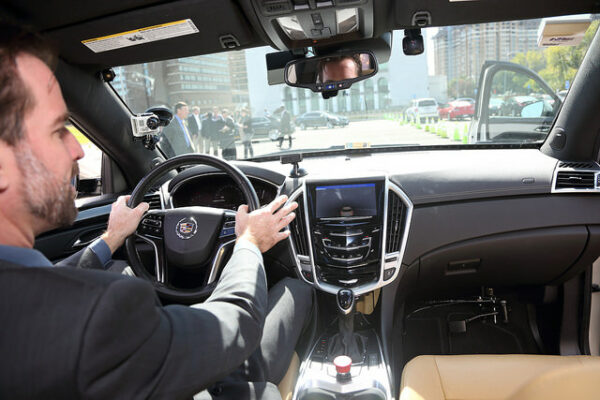
WOODBRIDGE — Federal and state officials are preparing for a future full of autonomous vehicles.
In the skies, “we’ve got drones delivering food during football games in San Fransisco, and drones delivering much-needed blood to others,” said Anthony Biddell, of the U.S Department of Transportation Department.
And when it comes to highways, “autonomous vehicle are coming sooner than you think,” he added, speaking to a crowd of Prince William County business owners on Sept. 27 in Woodbridge.
Biddell lauded Virginia for its work to develop a 90-mile network of Express Lanes in Northern Virginia on Interstates 66 and 95, saying the commonwealth is an example for the rest of the nation when it comes to developing public-private partnerships like the Express Lanes.
And those managed toll lanes may soon be a testing ground for new, autonomous vehicles.
“We have a 90-mile network of Express Lanes, that’s highly automated, and that’s a perfect place to test automated vehicles. No one else has this,” said Virginia Department of Transportation Chief Deputy Commissioner Robert H. Carry.
The state transportation official’s announcement comes weeks after Micron announced it would invest $3 billion at its Manassas facility to produce new technology for self-driving cars. The investment — the largest ever in Virginia — positions the state to be a leader in autonomous vehicles.
On local roads, getting around Prince William County is a lot easier than it used to be, said Coles District Supervisor Marty Nohe, who is also the Northern Virginia Transportation Authority Chairman.
Improvements to north-south routes like Prince William Parkway and east-west routes like Minnieville Road in Woodbridge has untangled gridlock on local roads.
Many of these projects were paid for as part of a road bond approved by county voters in 2006. Today, as the county looks to invest in more transportation improvements, they’ll take a “mobility” approach rather than widening or adding capacity to roads.
“Instead of doing congestion relief, we’ll look at projects that will create jobs and get you out of traffic,” said Nohe.
Instead of widening roads to move residents out of the county to work elsewhere, the new mobility projects might be adding sidewalks where they are needed to spur pedestrian and bicycling activity, which could bring jobs, he added.
The panel discussion was organized by the Prince William Chamber of Commerce and hosted at the George Mason Potomac Science Center in Woodbridge.