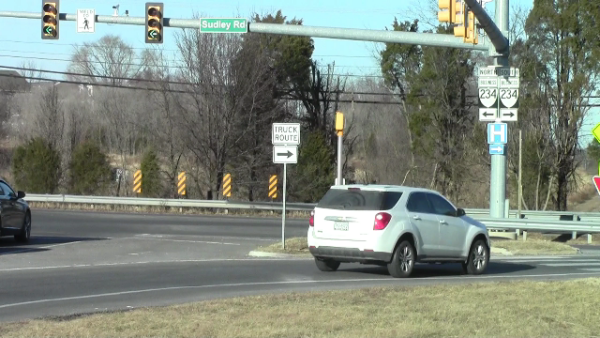
PRINCE WILLIAM COUNTY — A new bill that fully funds Metro to the tune of $154 million annually means traffic relief on Route 28 could come later than originally planned.
State legislators passed a bill this winter that would, for the first time since its inception, provide a dedicated revenue stream for Washington’s Metro rail system. The move, however, drains more than $100 million in revenues from the Northern Virginia Transportation Authority, charged with improving mobility on area roads and transit systems.
Six months ago, local leaders were bullish on a fix for Route 28 — both on a project in Fairfax County to widen the road from four to six lanes between the Bull Run and Route 29 and about a new Route 28 bypass around Manassas with the extension of Godwin Drive.
Not so much anymore as local leaders this week sent a letter to Gov. Ralph Northam asking him to keep the new funding for Metro, but to ensure it doesn’t come at the expense of other regional mobility projects.
The move to partially defund NVTA came as a surprise to its Chairman Marty Nohe, who is also the Prince William County Coles District Supervisor.
“Two months, ago they were telling me ‘[the Metro funding] was going to take about $30 million from our [NVTA] budget, a one-time expense, and that they would leave it there,” said Nohe.
But $100 million per year, taken from the coffers over multiple years would mean that Route 28 improvements — dubbed the most congested road in Northern Virginia, and with a fix price tag of $2o0 million, is considered to be NVTA’s mega project — could come much later than its anticipated opening in 2024.
Not only Route 28, the Metro funding bill would also place mobility projects in jurisdictions across Northern Virginia in danger going unfunded, or being delayed.
NVTA in December called for submissions for projects in need of $1.5 billion in funding. Those projects would be reviewed and scored, and the projects determined to move the most people would be prioritized for funding.
A total of $2.6 billion in projects were submitted, and those project scoring reviews are still happening at the NVTA. However, None says the Metro funding bill will mean it won’t make its target date of June to announce which projects won funding.
The NVTA was created after the General Assembly passed transportation reform in 2013, raising the gas tax in Northern Virginia and Hampton Roads, which was to create about $500 million in new funds for Northern Virginia for transportation projects.
If the state dips into NVTA monies, that could shake the confidence of credit ratings agencies which could downgrade NVTA bonds, making it more expensive for the authority to borrow money for future projects.
“If the [Metro funding] bill is signed in the way it is crafted now, I can see how the rating agencies would see this as a precedent. If the state takes away this money now, what’s to stop them from doing it again for another project and delaying us from paying it back?” said Nohe.
NVTA prioritizes its projects over six years, in projects that are funded over the course of multiple years, with bonds that are paid back over years.
In addition to roads, NVTA told the Governor it has also invested in Metro:
The NVTA and Northern Virginia Transportation Coalition have been strong supporters of Metro. Since the adoption of HB 2313 in 2013, the Authority has invested $184 million in Metro capital needs, including 8-car traction power upgrades on the Orange and Blue Lines, which will enable Metro to increase capacity and construction of the Innovation Center and Potomac Yards Metrorail Stations.