

Sponsored by: Prince William Conservation Alliance, National Park Conservation Association, Mid County Civic Association, and Prince William Wildflower Society.
Prince William County is a premier destination for residents across the region to delight in nature. We are fortunate to have two national parks within our ecologically diverse county! They provide vital resources for our community’s physical and mental health, quality habitat for wildlife, and protection for stream quality in critical waterways.
Prince William Forest Park, for example, on the county’s southeastern edge, protects roughly 15,000 acres of mainly Piedmont forest. This is the largest Piedmont forest in the national park system and provides a home to over 250 species of animals and 900 species of plants. From black bears and elusive freshwater sponges to towering trees and the easily overlooked, federally threatened small whorled pogonia, diverse flora and fauna welcome over 250,000 park visitors annually. Whether taking a walk in the woods to unwind from a long week, birdwatching for the pure enjoyment of hide-and-seek, or bike riding along the scenic drive to breathe in fresh air while pushing yourself to go farther, the park offers rich experiences for all.
But wait, there’s more! The park also provides the opportunity for scientists to study healthy ecosystems. With habitats globally becoming increasingly fragmented due to development pressure, research opportunities are shrinking. Prince William Forest Park is facing similar pressure. Much of the land around its border was formerly protected by the Rural Crescent (the county’s urban growth boundary). Now, without that policy, projects like La Benison and Potomac Technology Park are moving in, weakening the park’s ability to maintain all the services it provides to the community.
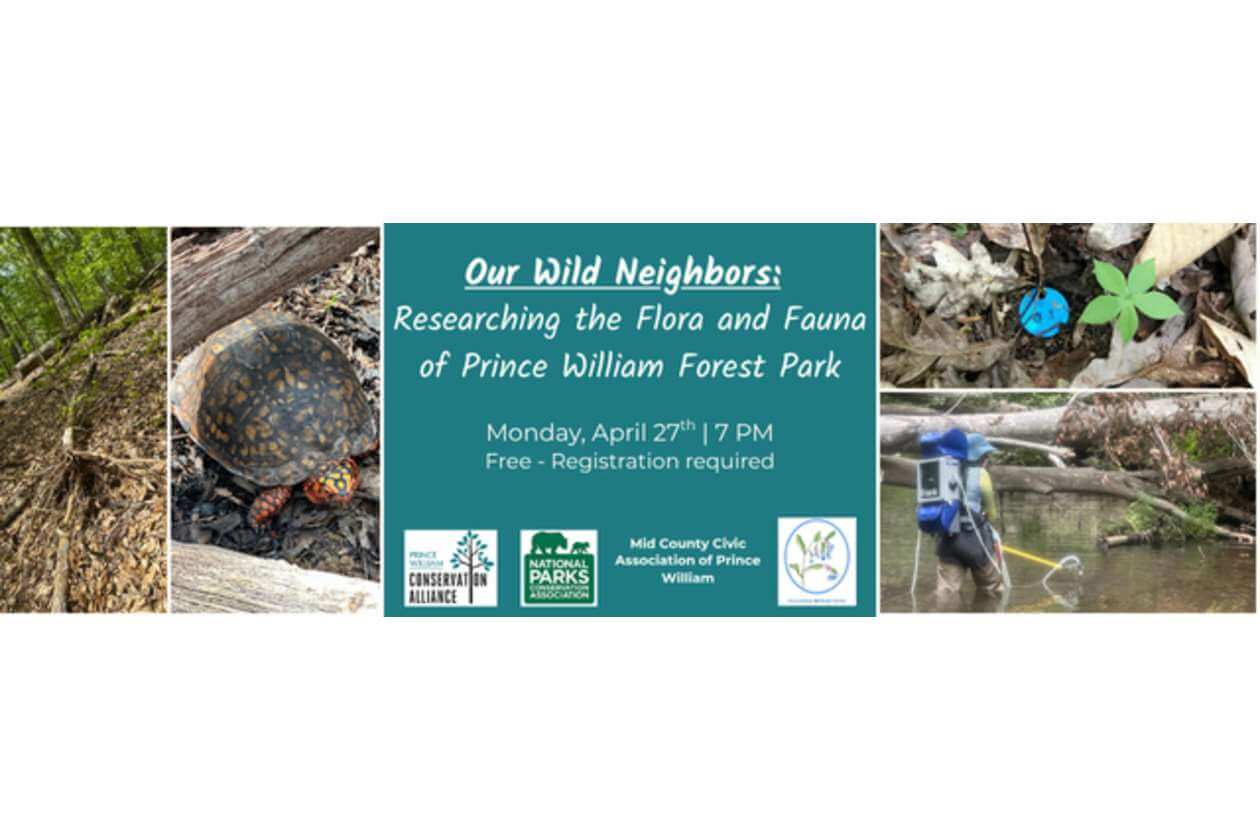
As part of our ongoing series, Places Worth Protecting, join us for an evening to explore foundational research being done thanks to the park and celebrate the knowledge we’ve gained as a result. Together, we’ll learn about:
-
Small Whorled Pogonia (Flora): Melissa McCormick, Smithsonian Environmental Research Center
-
Characterizing Deadwood (Flora): Dasha Maslyukova, Virginia Tech
-
Freshwater Sponge (Fauna): Colin Wang, William & Mary
-
At-Risk Turtles (Fauna): Elizabeth Hunter, Virginia Tech
Opening remarks will be provided by Kristi Shelton, PWFP biologist. We’re excited to learn about our wild neighbors who call PWFP home and the discoveries being made through researching them. Come learn with us before your next visit to the park!